
BOTANY REMEDIATION PROJECTS
Car Park Waste
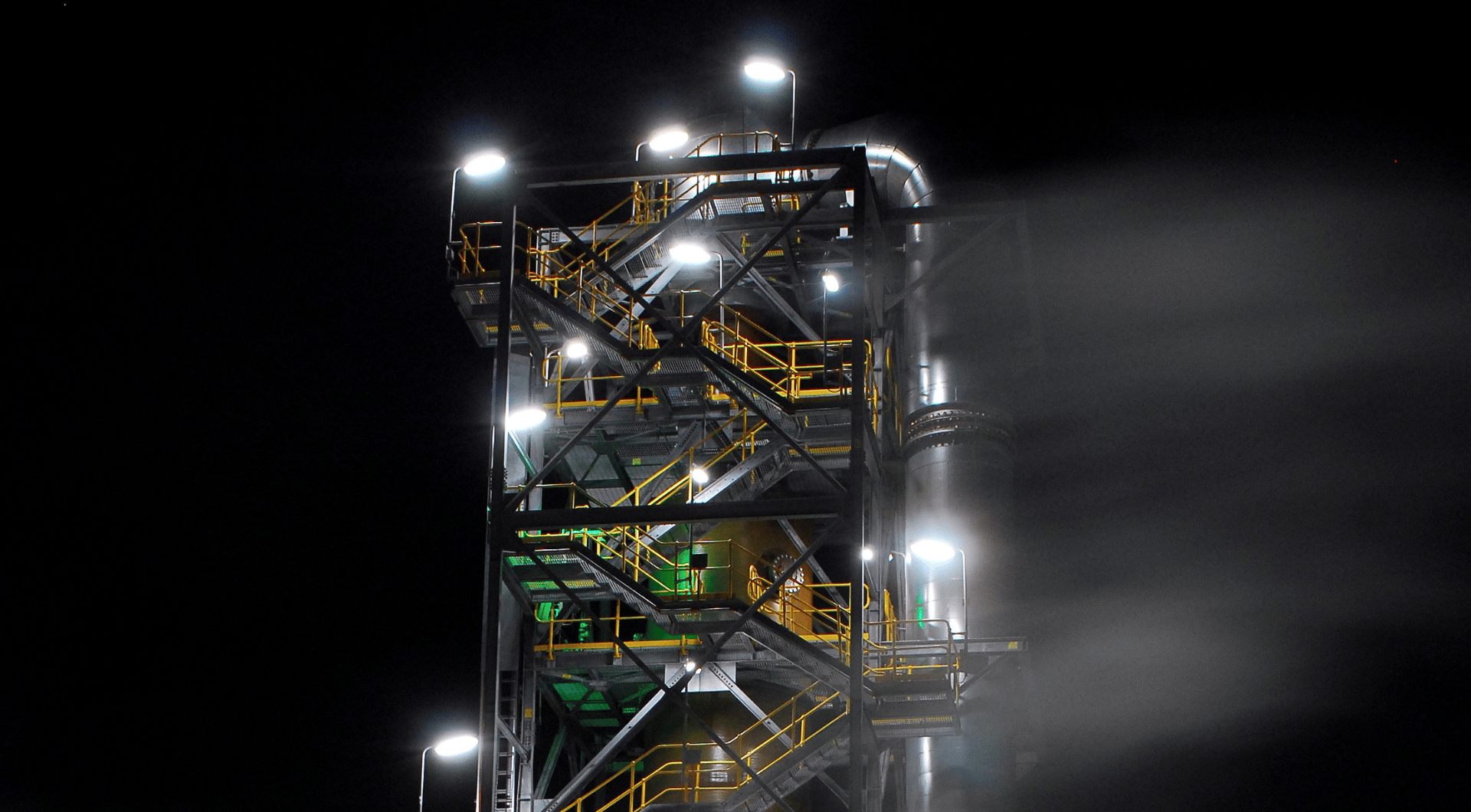
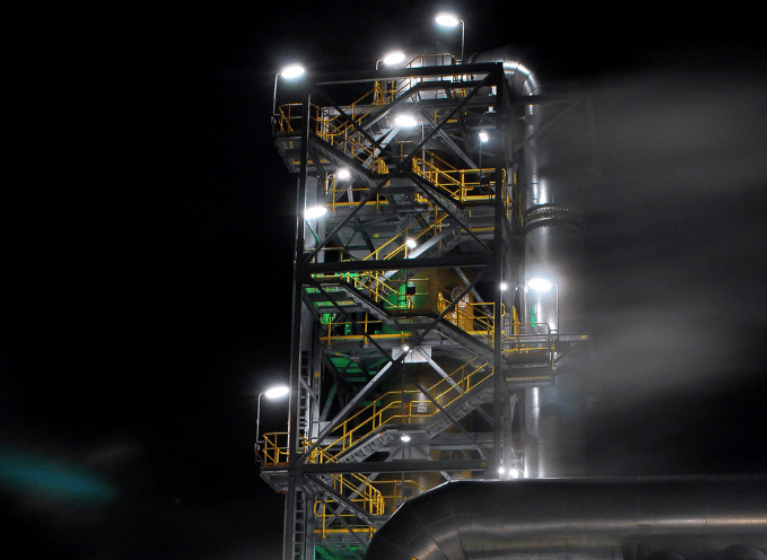
In 2012, Orica successfully completed treatment of contaminated soil at the site of the former Car Park Waste Encapsulation (CPWE) using a method known as Directly-heated Thermal Desorption (DTD).
Project Overview
In April 2012, Orica successfully completed treatment of contaminated soil at the site of the former Car Park Waste Encapsulation (CPWE) using a method known as Directly-heated Thermal Desorption (DTD).
In 2015 the remediated site and some adjacent land was sold for commercial or industrial development. In 2016 Orica conducted civil works required to complete the beneficial re-use of the treated soil.
Background
The CPWE was created when approximately 45,000 m3 of contaminated sand and coal ash was relocated in 1980 to a purpose-built storage facility covered by a car park at the north-eastern end of Botany Industrial Park (BIP) on Corish Circle, Banksmeadow. The waste was encapsulated in a synthetic Hypalon® liner and covered by thick soil walls and asphalt to establish the car park.
The soil in the CPWE was contaminated with hexachlorobutadiene (HCBD) and low levels of hexachlorobenzene (HCB) and hexachloroethane (HCE). HCBD is a waste byproduct with no commercial use that was produced during the manufacturing of chlorinated solvents, such as tetrachloroethene (PCE, commonly used as dry cleaning fluid) and carbon tetrachloride (CTC, an industrial solvent formerly used in the manufacturing of refrigerants). PCE and CTC were manufactured in the former Solvents Plant on BIP from the 1960s to 1991.
The waste was originally drummed and stored on site on a bed of boiler ash. Over time, these drums corroded, leading to contamination of the ash bed and underlying sandy soil.
In the late 1970s, Orica (then ICI Australia) investigated treatment and storage options for HCBD contaminated soil. At the time, there was no suitable technology to treat this soil. The best approach to manage it safely was to encapsulate it, effectively containing the soil in a synthetic liner and storing it underground until an appropriate remediation method became available.
The location of the former CPWE before treatment and a cross-section of its construction are shown in the above images.
Fact Sheet
Remediation works
Remediation works
Reports and publications
Fact Sheets
Fact sheets provide the community with simple and easy-to-understand information on the background, science and technology associated with the Car Park Waste Encapsulation (CPWE) Remediation Project. Fact sheets are current at the date provided.
- History of the CPWE - July 2005 (PDF 88.6KB)
- Remediation Technology: Directly-heated Thermal Desorption (DTD) - May 2011 (PDF 354.8KB)
- Project Environmental Monitoring - March 2012 (PDF 101.5KB)
- Air Quality Modelling - April 2012 (PDF 749.4KB)
- Project Timeline - April 2014 (PDF 77.6KB)
Remedial Action Plan (RAP)
The Jan/Feb 2009 "Revised RAP" was superseded by the May 2009 "Amended RAP" to take into account feedback received from the then Department of Environment and Climate Change (now the NSW EPA). In particular, the Department provided feedback relating to groundwater protection.
- Amended Remedial Action Plan – 7 May 2009 (PDF 2MB)
- Fig 1: Site Location (PDF 1.9MB)
- Fig 2: Regional Groundwater Contours, 1969 (PDF 2MB)
- Fig 3: Regional Groundwater Contours, 1994 (PDF 2.5MB)
- Fig 4: Shallow Regional Groundwater Contours, 2008 (PDF 652.1KB)
- Fig 5: Deep Regional Groundwater Contours, 2008 (PDF 705.4KB)
- Fig 6: CPWE Groundwater Levels and Flow Directions, 2008 (PDF 661.4KB)
- Fig 7: CPWE Hydrogeological Cross Section, October 2008 (PDF 2MB)
- Fig 8: Conceptual Site and Infrastructure Layout (PDF 92.6KB)
- Fig 9: Conceptual Excavation Staging (PDF 998.9KB)
- Fig 10: Conceptual Soil Treatment Area Layout (PDF 360.9KB)
- Fig 11: Conceptual Feed Soil Building Layout (PDF 449.9KB)
- Fig 12: Conceptual Excavation Soil Building Layout (PDF 247.5KB)
- Fig 13: Conceptual Cross of Excavation Soil Building Layout (PDF 49.1KB)
- Fig 14: DTD Treatment Process (PDF 79KB)
- Fig 15: Water Management (PDF 128.1KB)
- Fig 16: Conceptual Stockpile Management (PDF 118KB)
- Fig 17: Conceptual Civil Works Environmental Controls (PDF 95.7KB)
- Appendix A: Environmental Protection Licence 2148 (PDF 452.6KB)
- Appendix B: Summary of Groundwater Monitoring Events (PDF 937.9KB)
- Appendix C: Additional Review of Indoor Risk-Based Concentrations (PDF 292.6KB)
- Appendix D: Regulatory Compliance Discussion Report (PDF 4.1MB)
Human Health and Risk Assessment (HHRA)
The Human Health Risk Assessment (HHRA) associated with the CPWE was undertaken in accordance with the requirements of the HCB Management Plan set out by Australian and New Zealand Environment and Conservation Council (ANZECC). Since the initial assessment in 2002, the HHRA for the CPWE has been incorporated into the Consolidated Human Health Risk Assessment (CHHRA), which was conducted in 2005 and reported under the Groundwater Cleanup Project.
The CHHRA conclusions are considered in light of all monitoring results as they become available, and any change to the risks are reported to appropriate authorities and the local community through the Community Participation and Review Committee (CPRC).
A review of risk issues considering the future use of the CPWE site was published in January 2014.
Independent Expert Panel Requests and Reports
The following is a summary of the requests that were issued to the IEP. Written reports were sometimes produced as an end product of a specific request. These reports are available to be downloaded below.
Request No. 1 - All IEP members attended a CPWE project briefing and site tour conducted by Orica and Thiess Services, then attended the quarterly CPRC meeting to introduce themselves to the committee and answer any questions the CPRC may have had.
Site Audit Statements
CPWE Remediation Project Part B Site Audit Statement, June 2014 (PDF 10.2MB)
North East BIP Part B Site Audit Statement, May 2014 (PDF 1.8MB)
Related content

Mercury Remediation

Southlands
