
HSC chemistry education program
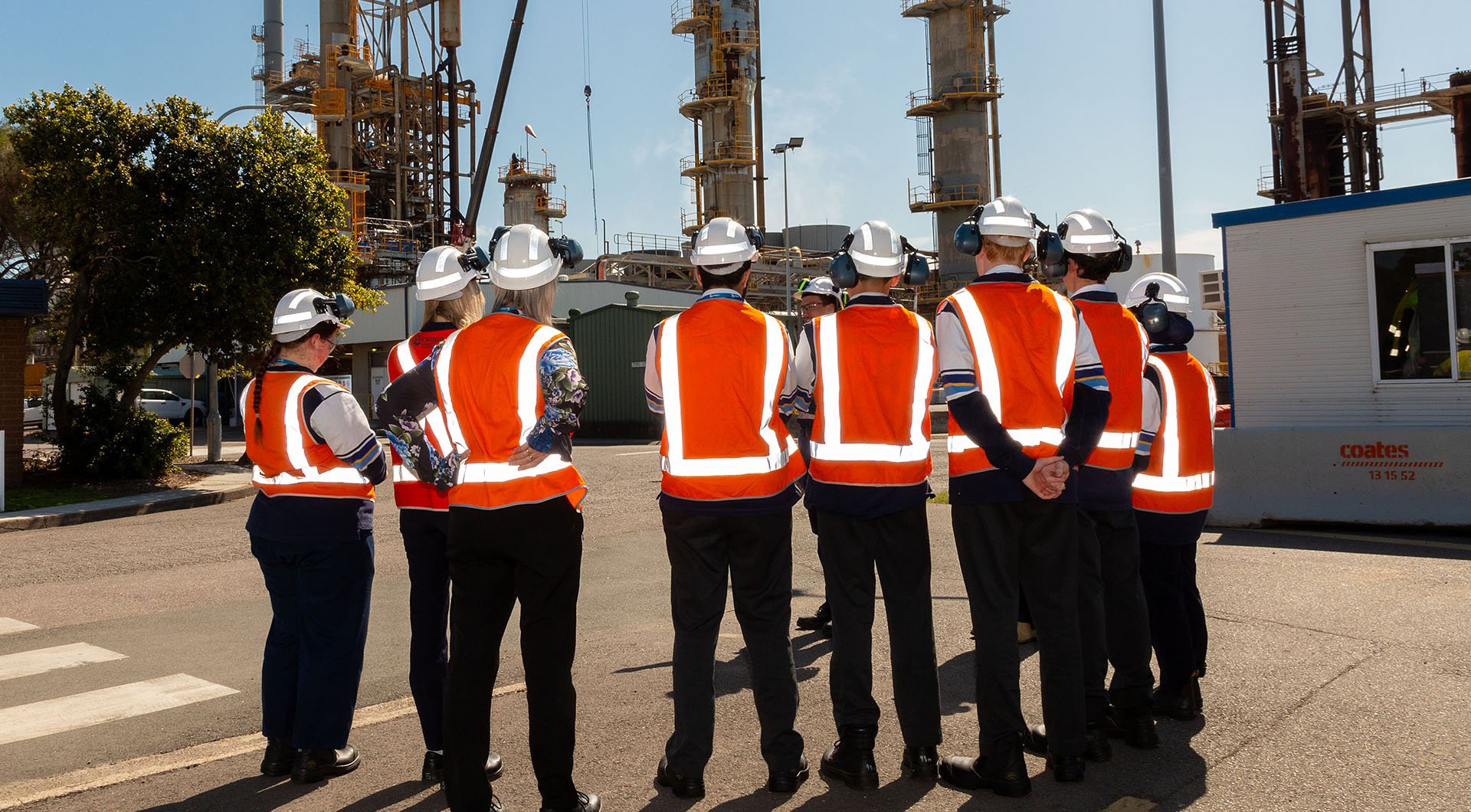
Orica’s HSC Chemistry Education Program provides a practical demonstration of key syllabus outcomes for Stage 6 chemistry students.
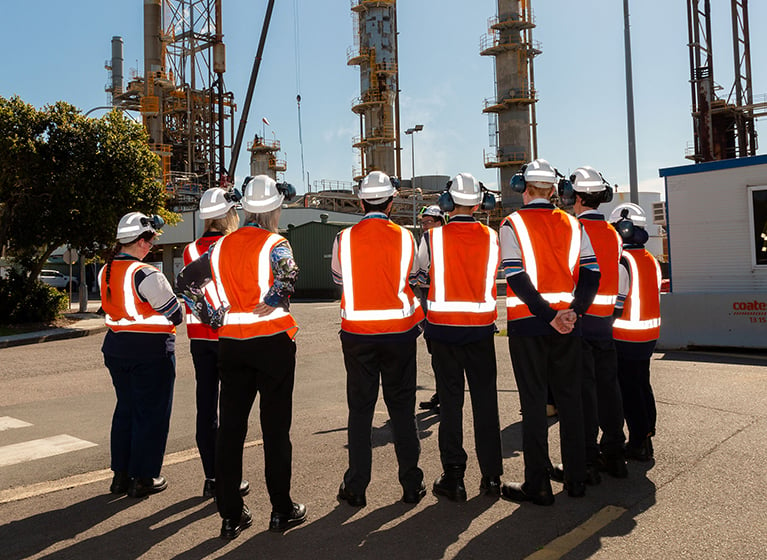
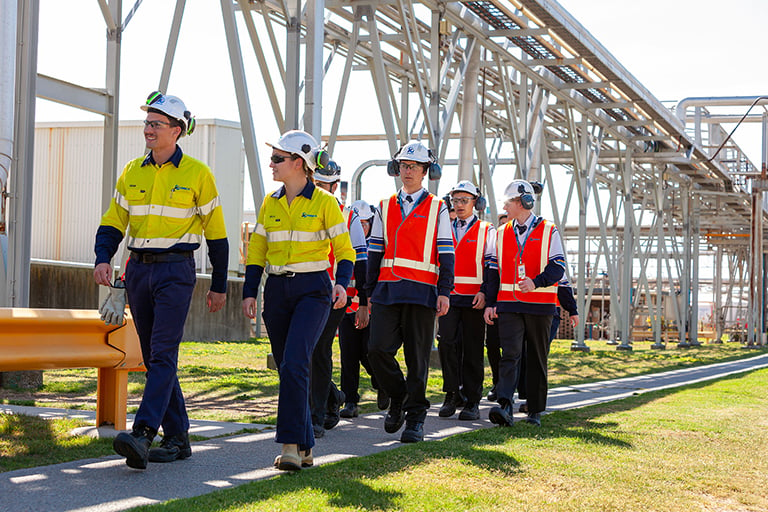
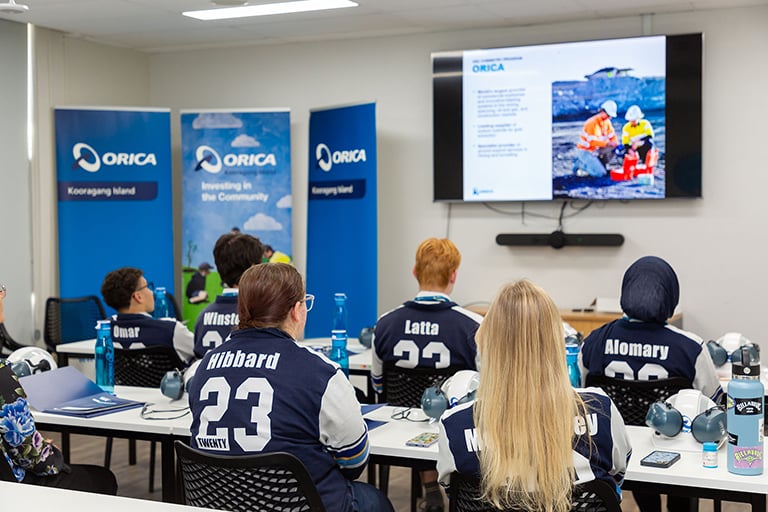
A guided site tour of the Kooragang Island facility, a presentation from an ammonia engineer and the opportunity to speak to recent graduates bring chemistry to life for high school students. The program runs for 2.5 − 3 hours and is offered free-of-charge.
The learning outcomes for modules 5 and 8 are achieved by examining:
- The Haber process
- Factors affecting equilibrium
- Product yield
- The Kooragang Island site's various products and their uses (e.g. ammonia, nitric acid, ammonium nitrate)
- Social, environmental, economic and other relevant considerations for chemical manufacturing.
Information for teachers
If you think the Orica HSC Chemistry Education Program would complement your students' learning outcomes, please book early to ensure your students can participate. Please note students are required to be 16 years of age and group sizes are limited to 25 students.
All personal protective equipment is provided, along with fact sheets and an Orica workbook, which students can complete during and/or after their excursion.
Program dates
The HSC Chemistry Education Program operates year round.
Let us know your preferred date and we'll do our best to fit you in. Contact our Community Relations Specialist by phoning 1800 789 044 or emailing [email protected].
Please note: we may not be able to accommodate your first time preference due to limited resources or other activities occurring onsite.
| Module 5 - Equilibrium and acid reactions | ||
|---|---|---|
| Objectives: | Content focus: | Outcomes: |
Students develop knowledge and understanding of equilibrium and acid reactions in chemistry.
| Students study the effects of changes in temperature, concentration of chemicals and pressure on equilibrium systems, and consider that these can be predicted by applying Le Chatelier’s principle. Students analyse the quantitative relationship between products and reactants in equilibrium reactions to determine an equilibrium constant. From this calculation students will be able to predict the equilibrium position, favouring the formation of either products or reactants in a chemical reaction. | Selects and processes appropriate qualitative and quantitative data and information using a range of appropriate media. Analyses and evaluates primary and secondary data and information. Solves scientific problems using primary and secondary data, critical thinking skills and scientific processes. Communicates scientific understanding using suitable language and terminology for a specific audience or purpose. Explains the characteristics of equilibrium systems and the factors that affect these systems. |
| Module 8 - Applying chemical ideas | ||
| Objectives: | Content focus: | Outcomes: |
Students develop knowledge and understanding of the applications of chemistry.
| The identification and analysis of chemicals is of immense importance is scientific research, medicine, environmental management, quality control, mining and many other fields. | Communicates scientific understanding using suitable language and terminology for a specific audience or purpose. Selects and processes appropriate qualitative and quantitative data and information using a range of appropriate media. Describes and evaluates chemical systems used to design and analyse chemical process. |