Case Study
Ore control workflow optimisation to maximise recovery with OREPro™ 3D Predict
30 Sept 2025
"After 14 months OREPro 3D Predict delivered an additional value of $45.2m in value, surpassing our goal of reducing ore mass variability when reconciled against short-term models."
Site profile
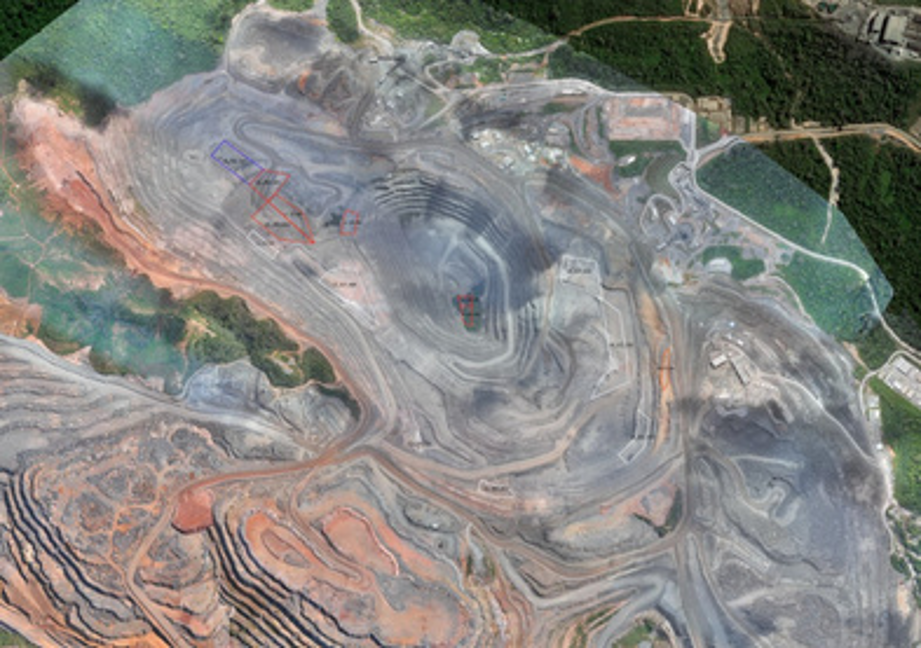
Salobo mine is located in the municipality of Marabá, in the southeastern region of Pará, Brazil, approximately 70km from Parauapebas. Operated by Vale since 2012, Salobo represents the company’s largest copper project and is the most significant Iron Oxide Copper Gold (IOCG) deposit in the country.
The operation is fully integrated, encompassing open-pit mining, mineral processing, and transportation to the rail terminal in Parauapebas. Over the past five years, average annual copper production has ranged between 320,000 and 355,000 tonnes. The mine's operational life is currently estimated to extend until 2044, with the potential for extension to 2052 through the reprocessing of stockpiled material.
The situation
As part of Vale’s ongoing commitment to improving its mining processes, initiatives that enhance operational safety and add value to production routines have gained increasing prominence across the company. In this context, Vale has been investing in strategies to identify and address potential gaps in the production process; one of which is the adoption and continuous improvement of ore control methodology.
Traditionally, ore control relied on manually delineating mining polygons using short-term models, which were later adjusted in the field based on visual inspections in an effort to minimize dilution, ore losses, and material misclassification. Although this process marked a significant advancement in ore control, discrepancies between planned and actual plant results persisted, as revealed by reconciliation analyses.
“Before implementing OREPro 3D Predict, it was extremely challenging to distinguish between different material types at the mining face due to the homogeneous coloration and the mixing of rocks caused by blasting.
Despite having a highly experienced ore control team, there was a possibility of ore loss due to reliance on visual inspection under the previous ore control methodology. With the adoption of the OREPro 3D Predict to model blast movement and maximize ore recovery, we were able to significantly optimize the release process and consistently add value to each blasted area."
— Carlos Eduardo Costa, Master Geologist
Technical solution
To enhance reconciliation processes, reduce ore dilution and loss, and improve material classification, Orica and Vale partnered to implement OREPro™ 3D Predict at Salobo mine. This cutting-edge digital solution integrates blast movement modeling with dig polygon optimization, operating entirely through software, eliminating the need for physical sensors or hardware that would require personnel to walk on the muckpile, thereby minimizing exposure to hazardous conditions.
Leveraging Orica Digital Solutions’ SmartVectors™ algorithm and utilizing existing site data such as pre-blast topography, short-term block models, and blast design parameters; the application accurately predicts blast movement, enabling the generation of optimized post-blast dig polygons with the objective to maximize ore recovery.
This successful collaboration between Orica and Vale demonstrates the power of digital innovation in mining, delivering measurable operational improvements while prioritizing worker safety.
The result
The implementation of OREPro™ 3D Predict at Salobo began in 2023, and continued alongside the traditional manual approach through the first trimester of 2024. This parallel use enabled a direct comparison of results in ore polygon design. Over the course of the project, approximately 210 blasts were conducted, generating a direct financial impact of more than $45.2 million, driven by the optimized dig polygons produced by OREPro™ 3D Predict.
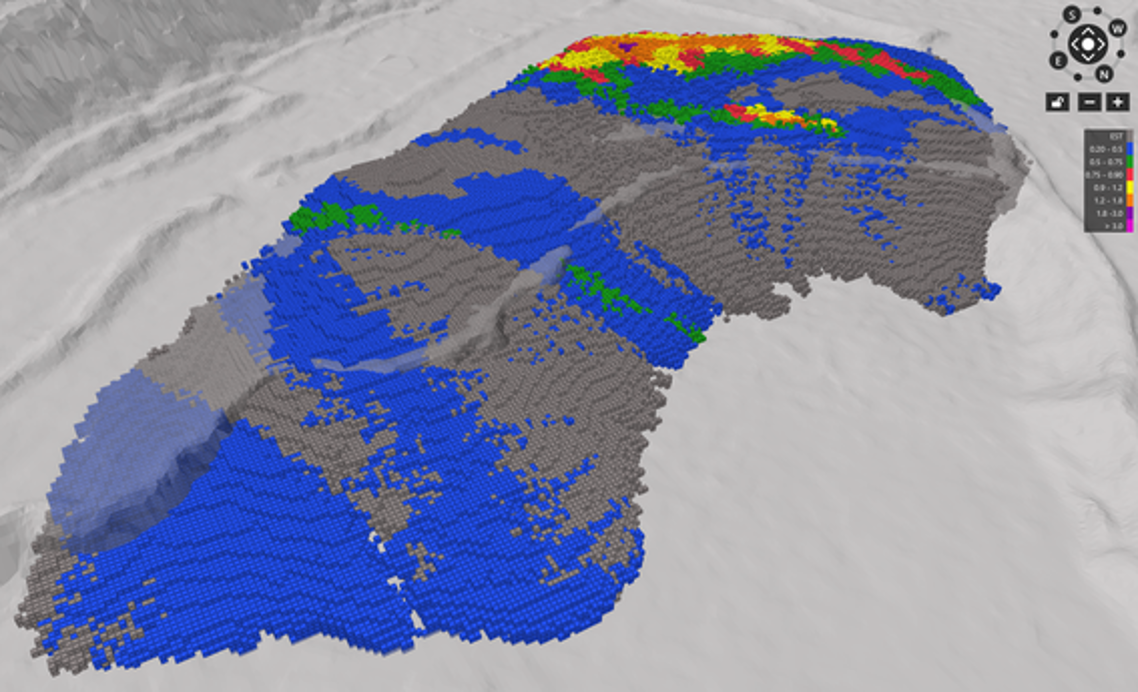
Figure 2 illustrates a simulated blast where optimized polygons were compared with those created using the conventional method. In this specific case, the added value of using OREPro™ 3D Predict was estimated at $193,000, driven by a 43% reduction in dilution, a 48% reduction in ore loss, and a 14% decrease in material misclassification.
While the impact of this added value varied from blast to blast, the more accurate allocation of materials, whether in terms of grade (low/high), competency (friable/competent), or alteration zone (oxidized/sulfurized), had significant implications for downstream processing and overall plant performance.
Acknowledgements
Orica Digital Solutions wishes to thank Vale S.A, Salobo Mine for their support and permission to publish this case study.
Author: Luiz Cadaxa
Date: September 2025
48% reduction in ore loss
Figure 2 above illustrates a targeted application where OREPro™ 3D Predict created significant value for the Salobo mine with a 48% reduction in ore loss, 43% reduction in dilution and a 14% decrease in material misclassification.
210 blasts
Over the course of the project, approximately 210 blasts were conducted, generating a direct financial impact of more than $45.2 million, driven by optimised dig polygons produced by OREPro™ 3D Predict.
OREPro™
Learn more about how OREPro™ can support your operations.