
Insight
From the first i-kon™ blast to a safer, smarter future: celebrating 25 years of EBS innovation
24 Apr 2026
This is an article featured in our February 2026 edition of Blasting and Beyond newsletter, available on LinkedIn.
Twenty-five years ago, Orica began a journey that would reshape the blasting industry. In this anniversary edition of Blasting and Beyond we hear from three thought leaders whose insight, curiosity and determination helped bring Electronic Blasting Systems (EBS) to the industry.
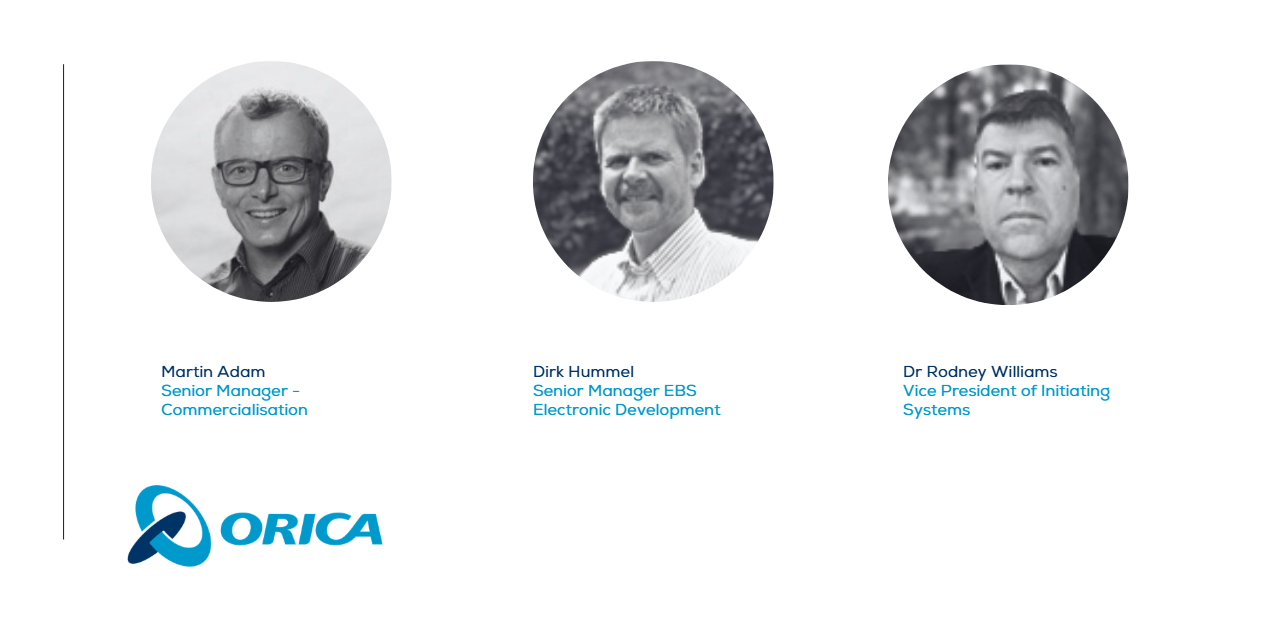
Martin Adam, Senior Manager Commercialisation, one of the earliest field engineers to deploy the i-kon™ electronic blasting system and experience its challenges and breakthroughs on bench,
Dirk Hummel, Senior Manager EBS Electronic Development, a foundational technologist behind the i-kon™ electronic blasting system, the NextGen EBS ASIC and many of the reliability improvements that followed, and
Dr Rodney Williams, Vice President of Initiating Systems, who connects the i-kon™ electronic blasting system story to Orica’s digital, automated and wireless future.
Together, their reflections offer a rare insight into the ingenuity, setbacks, discoveries and collaboration that helped EBS grow from an ambitious idea into a global benchmark for precision, safety and innovation. It’s also the story of the learnings that ultimately set the stage for one of the most significant advances in blasting – WebGen™, the world’s first wireless electronic blasting system.
A beginning marked by curiosity, courage and change
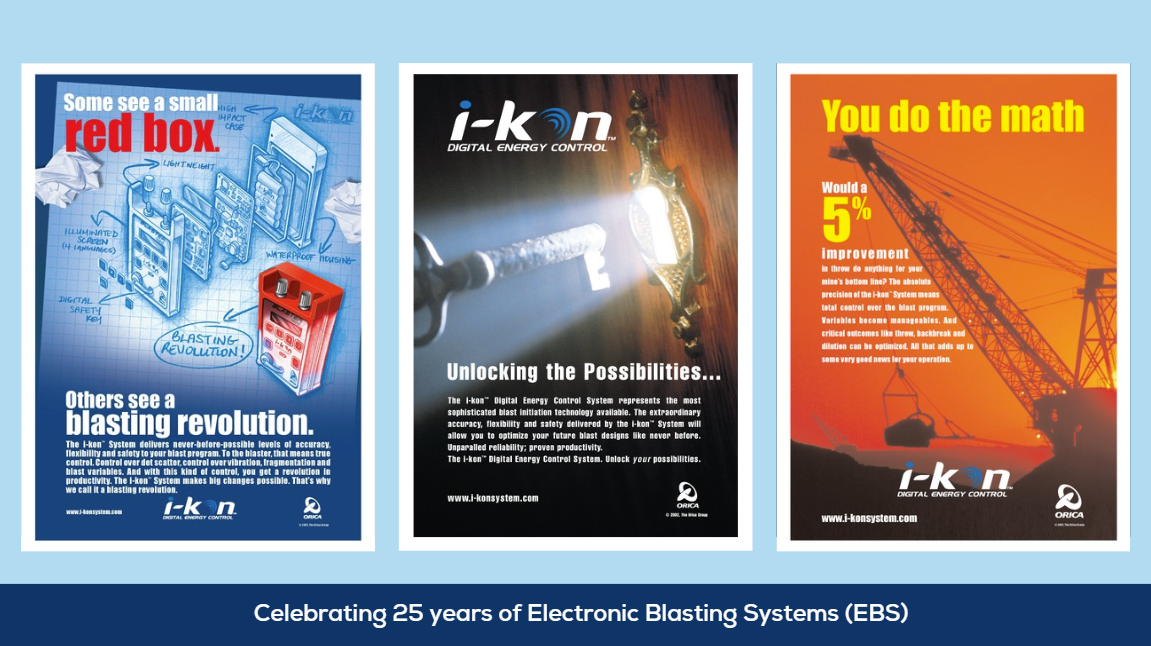
When the i-kon™ electronic blasting system first emerged in the late 1990s, mining operations relied overwhelmingly on non-electric and electric initiation. Accuracy was limited, consistency was difficult and although safety was improving, it remained a constant challenge.
Figure 2: The Popcorn and the Hammer video demonstrates the benefit of EBS systems.
Joining Orica at this pivotal moment, Martin Adam describes the excitement and uncertainty of stepping into the field on the cusp of a revolution.
“At the time, I did not yet understand the scale of change electronic initiation would bring,” he reflects.
The first large-scale deployments were bold and demanding. At sites such as Burton Coal mine, teams were introducing a completely new way of thinking about timing, testability and blast design. They faced scepticism from experienced supervisors, navigated concerns about cost and worked through complex field conditions that could not be fully replicated in the lab. Some of the early frustrations were not caused by the i-kon™ system itself, but by ambitious timing concepts that, in practice, led to frozen blasts and damaged highwalls in large overburden shots. For a young engineer in the field, it was a tough initiation, but it also reinforced a vital lesson: innovation at scale demands courage as well as disciplined learning.
Learning from the unexpected
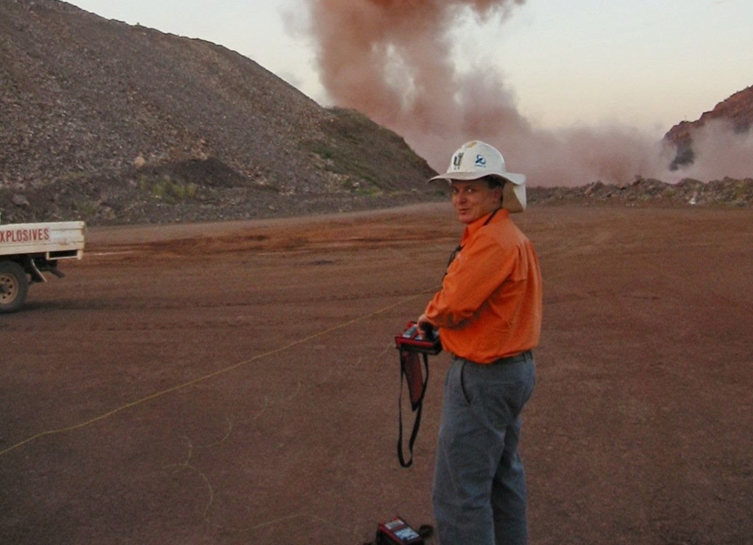
The early years of the i‑kon™ system showed us that true learning happens in the field. Behaviours that never appeared at plant scale emerged quickly once the system met real conditions. An unusual example was sunlight affecting translucent components in surface connected detonators. What looked like intermittent programming errors in the field disappeared once the detonators were tested back at the plant. Only by seeing the issue on bench did the team uncover the cause and resolve it by replacing translucent parts with opaque materials.
Other unforeseen issues arose in the largest, deepest shots in surface coal mines. These blasts deployed thousands of metres of wire in-hole. Even when resistance and leakage were within limits, programming would still fail. Field teams working with technologists eventually diagnosed that the higher capacitance of the wire insulation of the leg wires in emulsion based explosive was causing the communication issues.
These experiences reinforced a lesson that still guides Orica today. Field deployment is where technology proves itself. It reveals real‑world behaviours, sharpens design decisions and builds the confidence our customers rely on for safe, predictable and productive blasting.
Innovation shaped on bench
In the early days, features like downloading blast timing to the logger were not available. Users had to assign each detonator’s delay manually on the logger, at the blasthole collar. Programming thousands of detonators using only up and down arrows and fixed increments was repetitive and prone to error. To cope, teams like the one at Burton were driven to refine co-operative methods of working.
Working in tandem, shotfirers such as Rick MacMaster working alongside Martin Adam developed “speed logging” techniques, using custom timber boxes that cradled the logger, managed harness wire and kept essential tools within reach. By leapfrogging each other from hole to hole, they learned how to move quickly without compromising accuracy. It was practical innovation on the bench, driven by the realities of long, hot days and the need to get big shots ready for a fixed firing time.
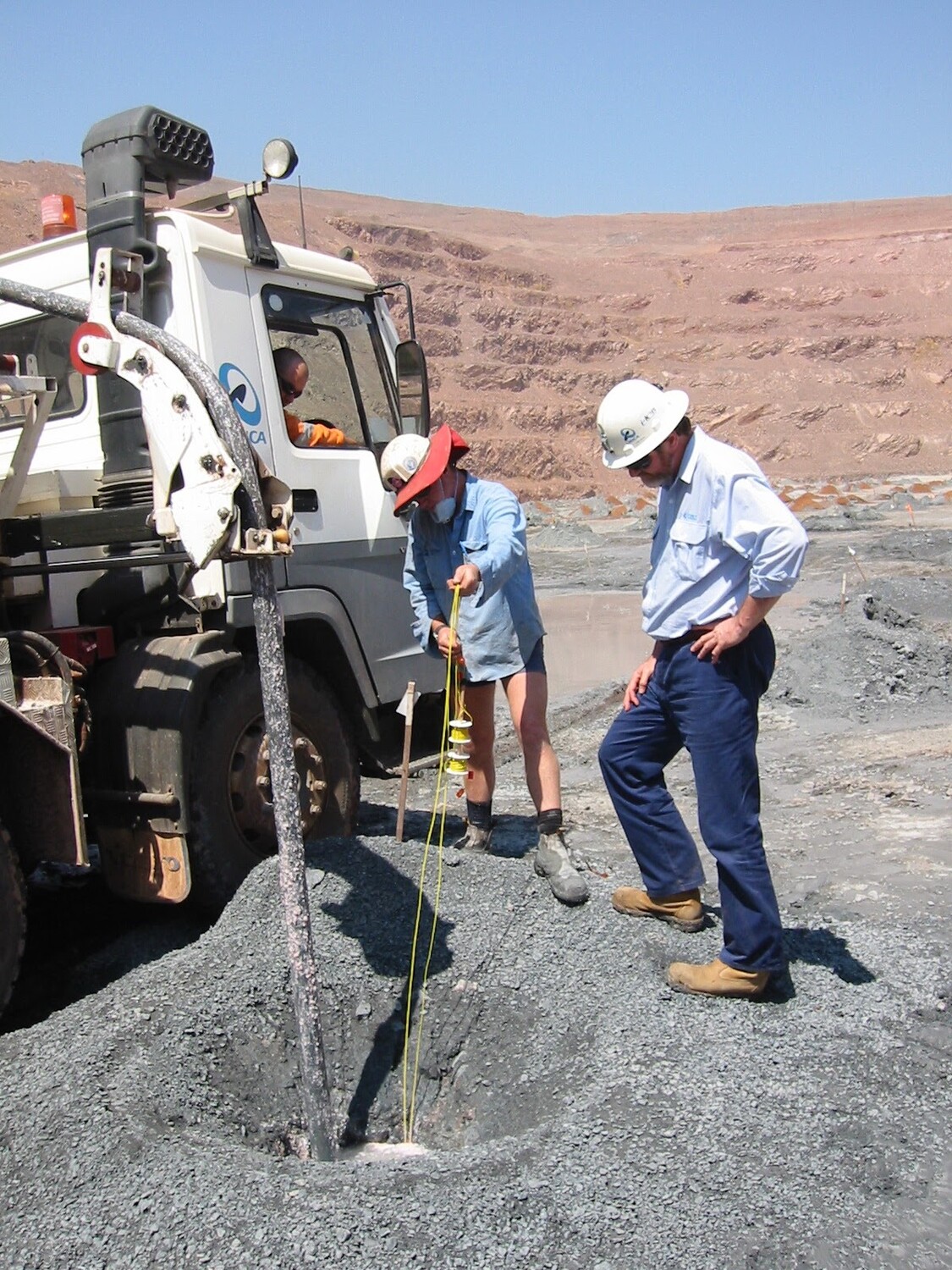
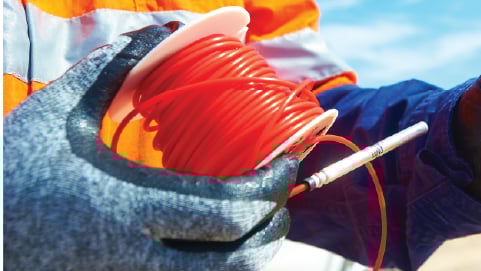
Remote firing was not yet available, so teams deployed and recovered hundreds of metres of firing cable using speaker wire on garden hose reels. It was hard work at the end of a long day, and it highlighted another truth that would later influence the development of Orica’s patented wireless initiation system WebGen™: any solution that removes unnecessary physical complexity from the blast is a step toward safer, more productive operations.
What stands out in these stories is not the problems, but the mindset behind the solutions – optimism, resilience and a commitment to learning quickly. These are qualities that still define Orica today.
Engineering breakthroughs that redefined what is possible
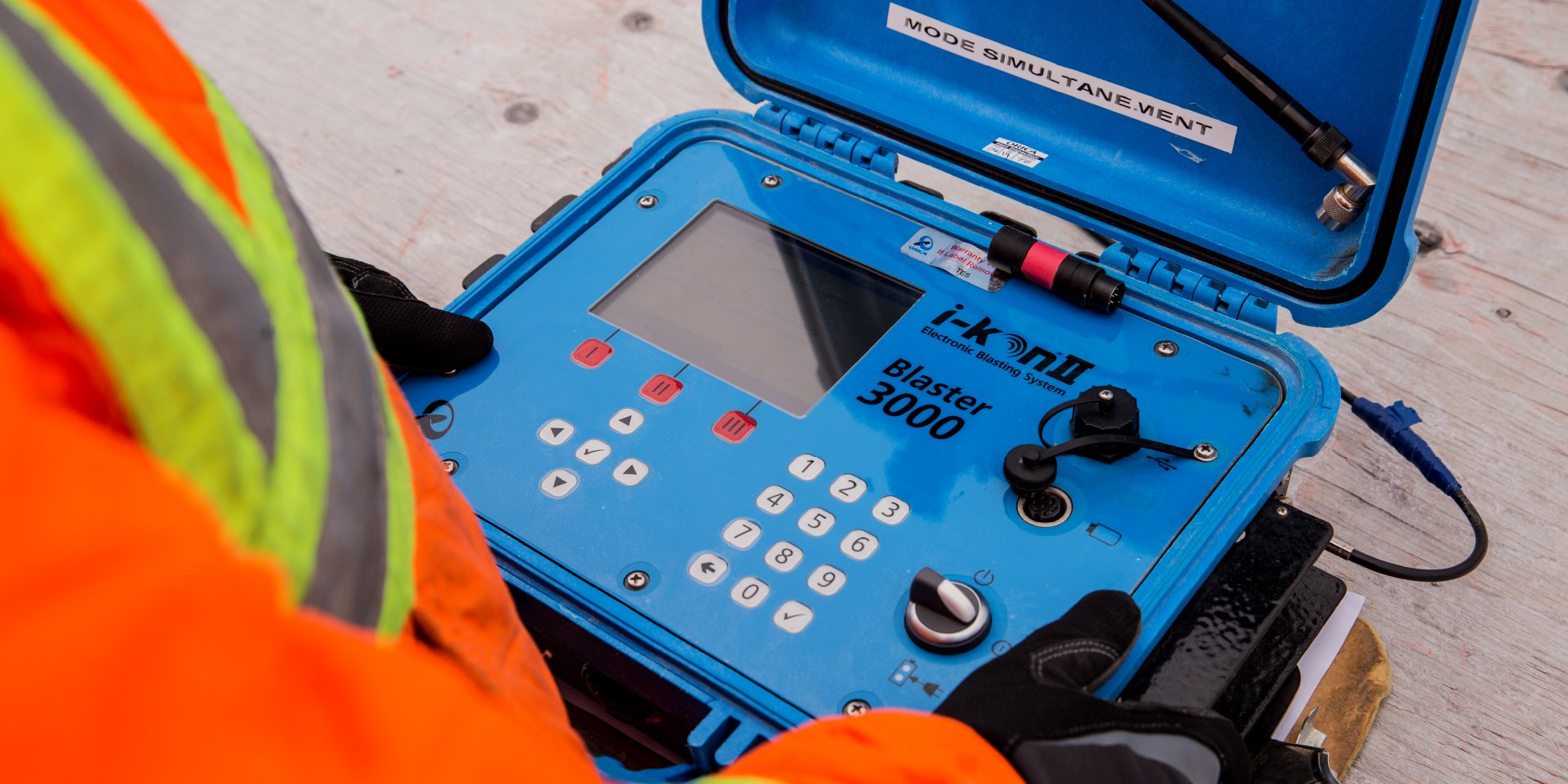
As the technology matured, so did its ambition. The NextGen EBS ASIC became the core of i-kon™ II, i-kon™ III, uni tronic™ 600 and other systems, delivering more accurate timing, stronger diagnostics and greater field robustness.
With each generation, capabilities improved:
- Greater timing accuracy and programmability for complex blast designs.
- Better diagnostic information to support safe, confident firing decisions.
- Enhanced performance in deep, wet and highly conductive ground.
- A pathway from wired systems to true wireless blasting with WebGen™.
Behind every breakthrough was the same driving force: helping customers unlock productivity, improve safety and manage increasingly complex operational and regulatory requirements.
Powered by people, grounded in partnership
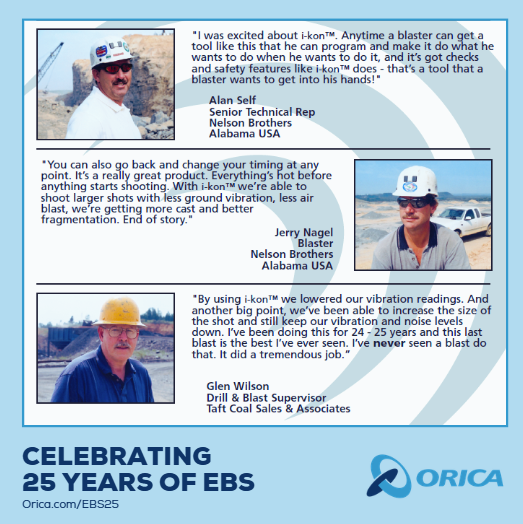
Innovation did not happen in isolation. It happened because early adopters opened their operations to experimentation. It happened because technologists, engineers and shotfirers believed in what the technology could become. It happened because teams across regions shared insights and mistakes openly.
Dirk Hummel captures this spirit clearly:
Early adopters gave us access to their sites, tolerated delays for research, and even modified infrastructure to help us test new ideas.
From Dr Rodney Williams, we are reminded of what truly drives innovation at Orica:
This celebration is not just about technology; it is about the people who made it possible and the challenges it has helped customers overcome.
Orica’s technology journey has always been human at its core. That is even clearer as we look toward the future of automation, digital integration and sustainable blasting.
Part of a 150-year story and a launchpad for the next chapter
EBS innovation does not stand alone. It sits within more than 150 years of Orica mobilising the earth’s resources safely and responsibly.
Across that history, Orica and its predecessors have helped introduce:
- Safety fuse in the 1830s, improving reliability and safety in initiation.
- Detonating cord in the early 1900s, enabled bigger, more productive blasts.
- Electric delay detonators in the 1910s, introduced the first testable initiation network.
- AN based bulk explosives in the 1950s, supporting large surface mining.
- Water gels and early blast modelling in the 1970s.
- Emulsion explosives and non-electric detonators in the 1980s.
- Mobile Manufacturing Units in the 1990s.
- Electronic Blasting Systems that transformed precision, timing and blast control from the 2000s.
Today, that legacy continues through:
- The upcoming i-kon™ III Digital release.
- The world’s first truly wireless initiation system - WebGen™.
- The lead-free Neo™ range, advancing sustainability.
- Digitally integrated platforms such as BlastIQ™ and SHOTPlus™, which connect design, execution and measurement in a single data driven workflow.
As Rodney notes,
What excites me most is our ability to bring together Digital and Blasting Solutions to drive value from mine to mill.
A future built on safety, sustainability and vision
Wireless blasting is opening the door to greater automation in drill and blast. By removing physical wired connections, mines can rethink how blasts are designed, sequenced and executed — reducing constraints and unlocking new operational flexibility. Shaped around customer needs from day one, WebGen™ enables safer extraction, simplifies workflows and makes previously inaccessible ore viable by allowing mines to redesign how they operate.
As the world’s first patented, truly wireless initiating system, WebGen™ removes downlines and surface connecting wires, using secure signals that penetrate rock, air and water to initiate blasts reliably.
Without wired connections, it enables safe pre loading away from hazardous brow areas underground. This removes the need for re entry between blasts and allows more flexible, safer mining sequences that also recover more ore.
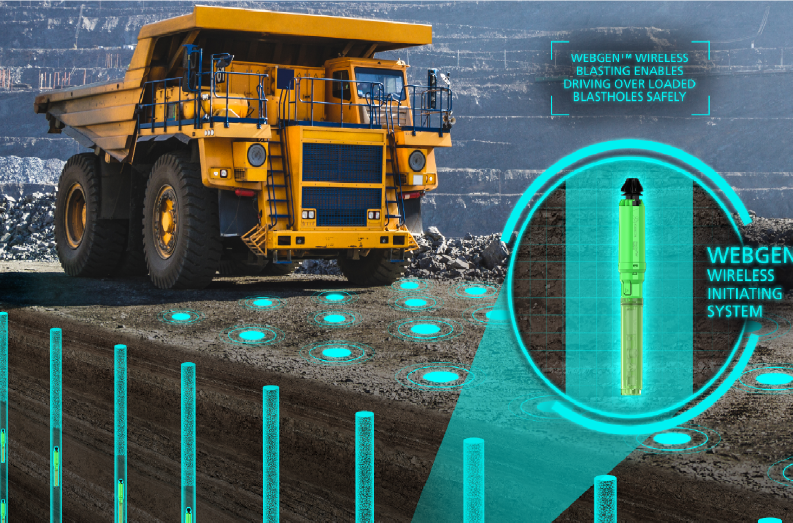
In surface operations, WebGen™ reduces exposure during high-risk activities such as working under highwalls by removing the need to connect and re enter loaded patterns. Those patterns can remain accessible through the mining sequence, allowing areas that would otherwise be sterilised to function as haul roads — maintaining access, supporting equipment movement and improving overall operational efficiency. It also reduces lightning risk around sleeping blast patterns, which means mines can avoid shutting down large areas of the mine during storms.
By removing physical constraints and changing how blasts are planned, loaded and executed, WebGen™ makes blasting more predictable and repeatable. That consistency allows outcomes to be measured and compared, helping teams refine designs, improve sequencing and make better decisions over time.
Looking ahead, Orica’s commitment is clear:
- Safer operations through automation, wireless systems and continual improvement.
- Smarter decision making through real time data, modelling and integrated digital platforms.
- More sustainable blasting through innovations such as lead-free detonators and blasting techniques that help manage vibration, dust and emissions.
This is no longer just the evolution of a product line. It is the evolution of an industry, and Orica is proud to help lead that change in partnership with customers and communities.
How early EBS learnings led to WebGen™
The journey to WebGen™ did not begin with wireless technology. It began two decades earlier, when technical service engineers such as Martin Adam and technologists such as Dirk Hummel were discovering how electronics behaved in real blasting environments, from deep overburden coal shots to complex construction blasts.
In parallel, Orica was advancing new blasting techniques, digital modelling and a strong focus on safety. Those early field learnings highlighted the need for solutions that removed people from harm, improved underground productivity and made pre‑charging possible in environments where wired systems created operational limits. WebGen™ 100, the world’s first commercial wireless electronic blasting system, was a direct result of that technical, operational and cultural learning forged across the early EBS era.
Today, WebGen™ 200 continues that evolution. With more than half a million WebGen™ primers fired globally, the technology is now reliable and proven at scale. It enables safer pre‑charging, improved draw‑point productivity and greater flexibility in both underground and surface applications. Together with i‑kon™ Digital and our digital solutions, it showcases how 25 years of learning in the field continue to shape the next generation of drill and blast.
A moment of gratitude and a look ahead
After 25 years, the reflections are personal as well as professional.
For Dirk,
EBS feels like a father and son relationship. I have been involved from the first sandbox experiments to the global rollout. It has been exciting, mind opening and incredibly rewarding.
Martin looks back on early challenges with humour and pride. From puzzling sunlight issues to long days of speed logging and reels of speaker wire, those experiences shaped not only a product, but a generation of blasting professionals.
Rodney looks to the horizon with optimism. He sees an Orica that is uniquely positioned to connect blasting and digital solutions from mine to mill, and to continue “igniting opportunity” and “delivering value” for customers around the world.
Here is to the next 25 years
To every person who contributed to this journey, thank you. Your curiosity, resilience and partnership have shaped an innovation that continues to create opportunity and deliver value every single day. As we look forward, we do so with the confidence that comes from our history, the energy of our people and a shared commitment to building a safer, smarter and more sustainable future for our industry.
As we continue to celebrate 25 years of EBS, follow our stories.







The latest EBS Stories

Case Study
Implementing ORBS™ Centralised Blasting System in an underground mine.

News
Inside EBS: Dirk Hummel on the Origins of i-kon™

Case Study
Reducing operational downtime while enhancing quarry blast safety with uni tronic™ 600 remote firing system.

News
Celebrating 25 years of EBS

News
Demystifying Electronic Blasting System (EBS) Dynamic Pressure Resistance Claims.

News
Orica and Oyu Tolgoi partnership drives mining innovation and efficiency in Mongolia
News
Orica at EFEE 2025

News
Transforming mining with WebGen™: the wireless blasting revolution
