
Insight
Why safety-critical monitoring changes everything — and why SSR-XT sets the benchmark
30 June 2026
GroundProbe Head of Product Strategy, Albert Cabrejo
Early in my career, I learned that in geotechnical monitoring, the most important decisions are often made in the least forgiving moments.
Conditions change quickly. Information is rarely perfect. And the consequences of getting it wrong are significant.
Over the past two decades working with slope stability radar, I’ve seen the evolution of monitoring technology firsthand. We’ve moved from limited visibility into slope behaviour to real-time, high-resolution data that allows us to understand movement as it happens.
But experience has also taught me something more important:
Not all monitoring is equal when the stakes are highest.
When monitoring becomes safety-critical
In mining and civil environments, monitoring isn’t just about observation—it’s about intervention.
Slopes are constantly influenced by environmental and operational factors. Movement can start subtly, then accelerate rapidly. The window to act is often narrower than we expect.
Radar technology has become an essential tool in this space, enabling continuous monitoring and early detection of instability.
But in my view, the defining line isn’t whether a system can detect movement.
It’s whether it enables action in time.
Safety-critical monitoring is not about detecting movement eventually. It’s about detecting it early enough and with enough certainty to act without hesitation.
That distinction shapes everything. It determines how systems are designed, how data is interpreted, and ultimately, how decisions are made.
What I’ve learned about confidence in the field
When you spend time with geotechnical teams on site, a consistent theme emerges: they don’t need more data, they need confidence!
I’ve worked alongside engineers making decisions under pressure, often with incomplete information and limited time. In those moments, complexity doesn’t help. It slows things down.
What matters most is clarity: Clear signals. Clear insights. Clear actions.
The true measure of a monitoring system is not how much data it produces. It’s how confidently a geotechnical engineer can act on that data in real time.
This is where many monitoring systems fall short. They are technically capable, but operationally challenging. They require interpretation, validation, or second-guessing.
In safety-critical environments, that delay introduces risk.
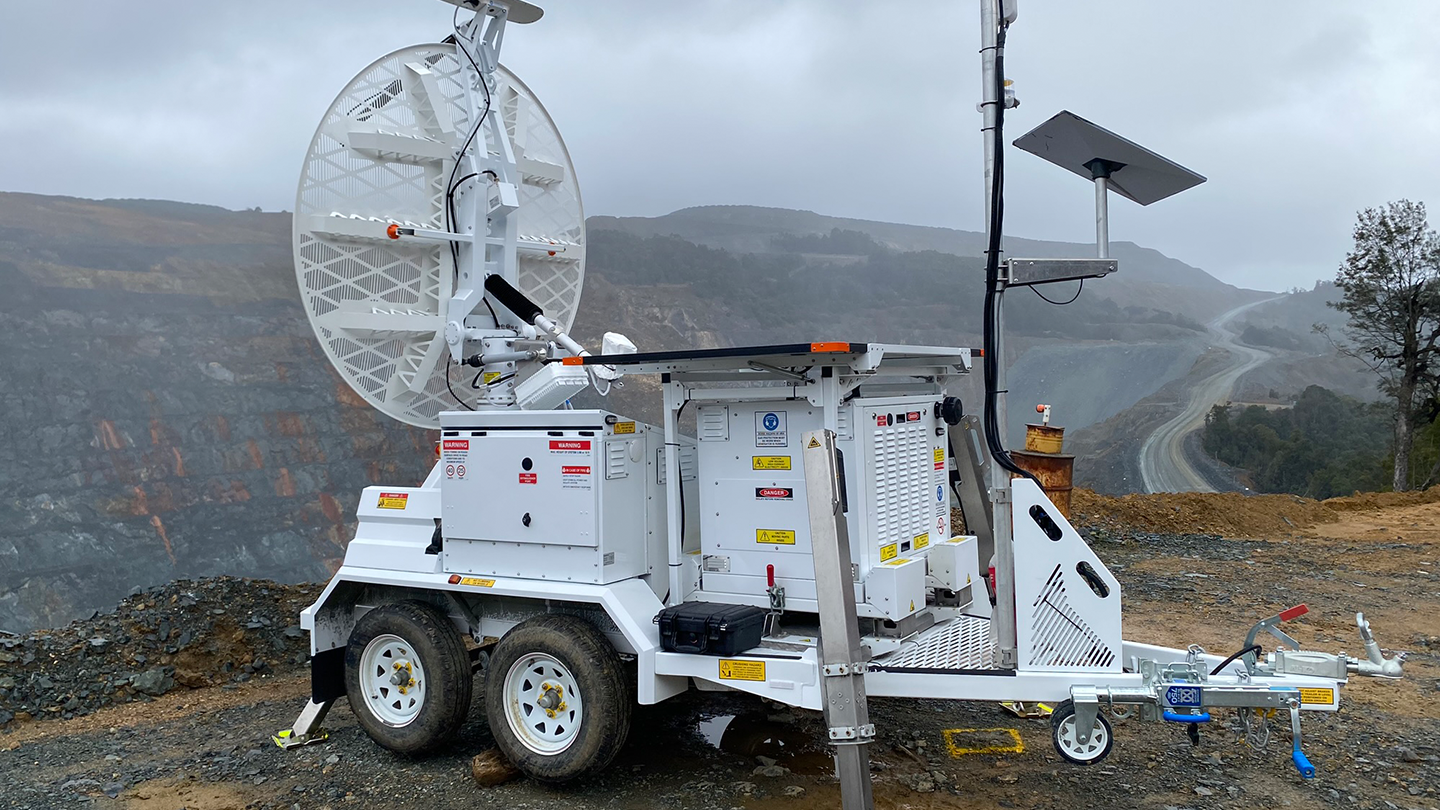
Why we designed SSR-XT differently
With SSR-XT, our starting point was not technology; it was the reality of the environments our customers operate in.
We knew that in high-risk areas, systems need to perform consistently, predictably, and without ambiguity. They must deliver reliable insights at the moment they are needed, not after additional processing or interpretation.
That’s why SSR-XT is purpose-built for targeted, safety-critical monitoring, rather than trying to be all things to all applications.
It focuses on what matters most:
- High-precision detection in critical areas
- Continuous, real-time monitoring
- Immediate visibility of change where it matters.
In practice, this means geotechnical teams can identify movement trends early, pinpoint areas of concern, and act with confidence.
I’ve seen this in real-world deployments, where continuous, safety-critical data allows teams to identify hotspots and make informed decisions about safety and operations.
We designed SSR-XT with a single priority: to provide the most reliable, actionable insight in the moments that matter most. That means engineering every element around certainty, not compromise.
Why ‘safety-critical’ is not just a label
The term “safety-critical” is widely used, but it’s often misunderstood. To me, it has a very specific meaning. A safety-critical system is one where:
- Missing a signal has consequences
- Reliability is non-negotiable
- Data must be trusted immediately.
This is fundamentally different from systems designed for broader monitoring or long-term analysis.
Across our portfolio, we recognise that different scenarios require different tools. That’s why solutions are aligned with safety-critical, critical, and long-term monitoring needs, rather than being treated as interchangeable.
SSR-XT sits at the most demanding end of that spectrum. It is designed for situations where performance must be consistent and where confidence cannot be compromised.
What leadership really means in monitoring
In this industry, leadership isn’t defined by specifications or feature lists.
It’s defined by trust. Trust that the system will perform reliably. Trust that the data reflects reality. Trust that when an alarm is triggered, it means something.
GroundProbe has built that trust over decades, working alongside customers to refine radar technology in real operating conditions, not just controlled environments.
For me, SSR-XT represents the culmination of that journey. It’s not just about advancing technology. It’s about redefining what operators can expect from it.
The standard going forward
As our industry continues to evolve, so will expectations of monitoring systems.
But the fundamental question will remain the same: Can the system be trusted when it matters most?
In safety-critical environments, time is not just measured in seconds; it’s measured in decisions. Our responsibility is to reduce uncertainty, so those decisions can be made with confidence.
That’s the principle behind SSR-XT.
And in my view, it sets the standard for where safety-critical monitoring needs to go next.
- ALBERT
For more information visit GroundProbe Next-Generation Solution