
Blog
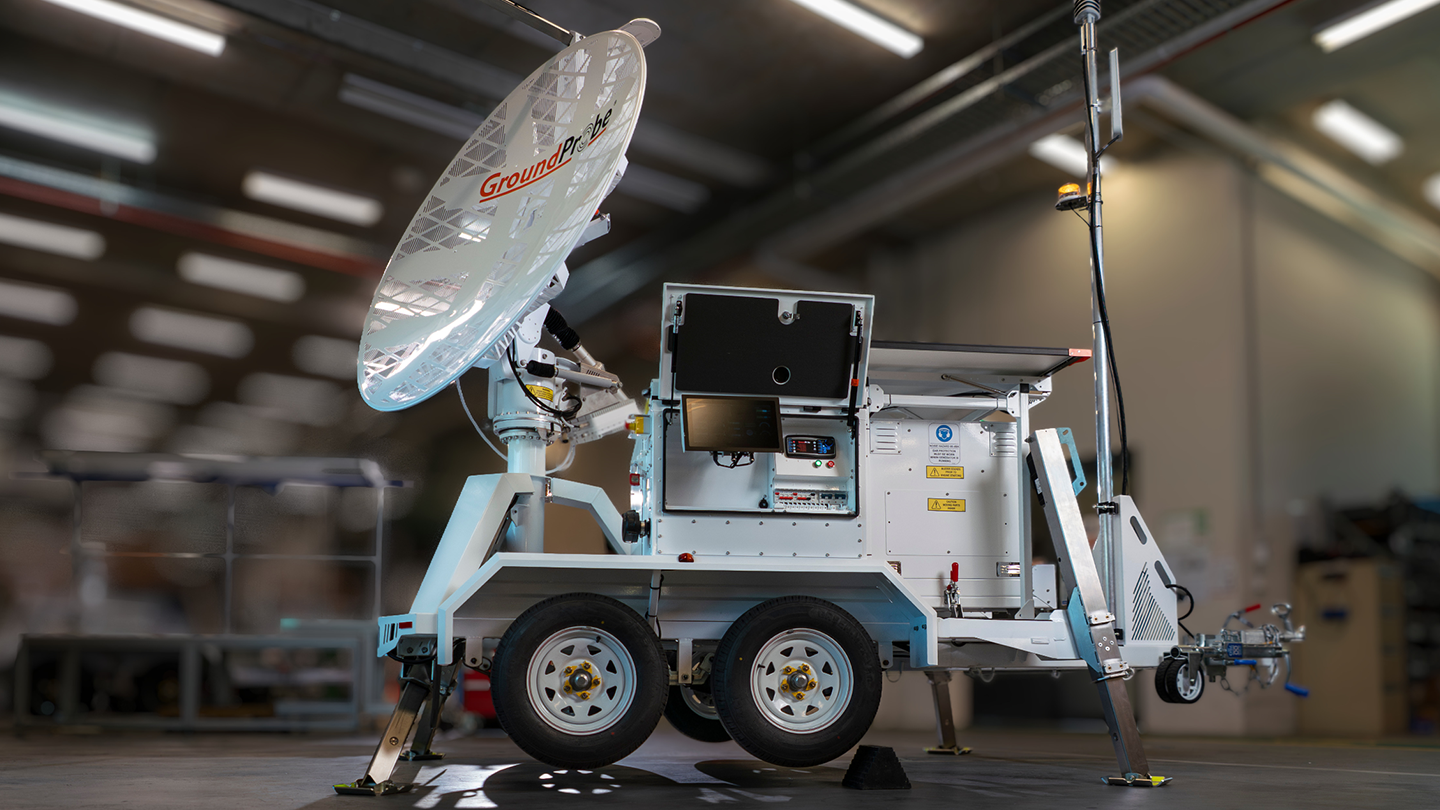
The evolution of a Next-Generation Radar Solution
16 Sept 2026
Built by experience, proven in the field
The Next Generation Solution was not created in isolation. It is the result of more than 25 years of experience monitoring some of the world's most complex and demanding mine sites. Every design decision reflects what GroundProbe has learned in the field: about reliability, safety, and what operators genuinely need when they’re managing risk in real time.
Throughout its development, five priorities consistently shaped decision-making: helping users save time, simplifying complex tasks, maximising uptime, improving energy efficiency and strengthening reliability. These principles ultimately became the foundation of the Next Generation Solution and continue to shape how customers experience the platform today.
This is the story of how that experience shaped a next‑generation radar platform.
Chapter 1: Learning from the world’s toughest environments
For more than two decades, GroundProbe radars have operated far beyond controlled laboratory settings. They have endured extreme heat in Western Australian iron‑ore pits, sub‑zero winters in Northern Canada, and high‑altitude pressures across South America.
Operating in these environments generated a deep bank of site‑specific intelligence. Over time, patterns emerged: what failed, what endured, and what truly mattered to people relying on radar data to keep sites safe.
That experience made one thing clear: The Next Generation Solution could not be an incremental update. It required a complete redesign, built around three core priorities:
- Rugged reliability in extreme conditions
- Advanced remote diagnostics to reduce on‑site intervention
- More efficient workflows to support faster decision‑making
It also reinforced a simple customer expectation: monitoring systems must perform reliably regardless of conditions. The Next Generation Solution was therefore engineered to be even more robust and reliable, delivering dependable performance and trusted data where it matters most.
The Next Generation Solution was conceived as a long‑term platform, one designed to lead the industry for decades, not just years.
Chapter 2: Letting customers set the direction
Before design work began, customer feedback had already defined the outcome. Through thousands of site visits and support interactions, users delivered a consistent message: reliability is non‑negotiable.
Designing a radar system involves constant trade‑offs between performance, power, size, cost, and complexity. When technical decisions became difficult, the team returned to that customer mandate. The team prioritised long-term durability and system uptime over aesthetic features or short‑term savings.
By letting customers define the primary constraint, The Next Generation Solution was engineered for the realities of mining sites, not theoretical ideals.
Chapter 3: When the field becomes the final judge
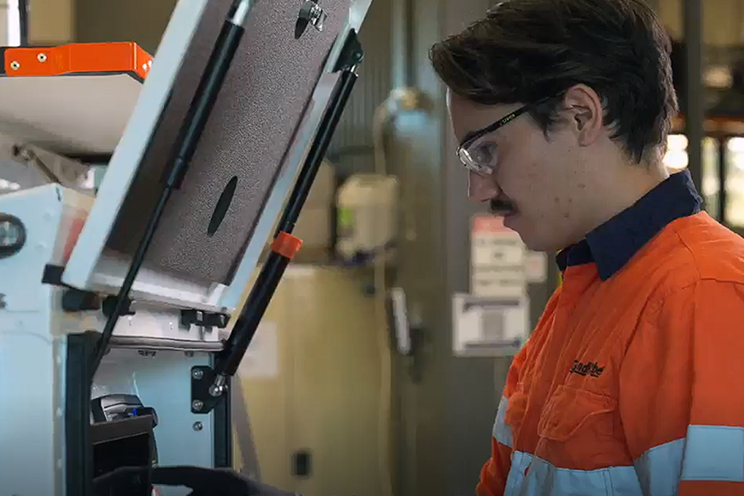
Laboratory testing plays a critical role, but it cannot replicate real operating conditions. Over the years, GroundProbe has encountered challenges no lab could simulate, including wildlife damaging cables, fine metallic dust infiltrating components, and constantly shifting atmospheric conditions affecting radar data.
Real-world trials were therefore non-negotiable. The Next Generation Solution was deployed alongside Series 3.5 on active sites, monitoring the same walls under identical conditions. This side-by-side testing confirmed that The Next Generation Solution matched and exceeded the performance and reliability users already trusted.
For GroundProbe, this is the gold standard.
Chapter 4: Recognising the Need for a New Generation
The idea for The Next Generation Solution did not emerge overnight. It grew out of customer feedback and evolving expectations - the requirements of the operating environment were changing.
Safety concerns highlighted the risks of manual setup. Customers wanted a fully solar-powered operation and demanded lower energy consumption. Remote sites made physical service visits increasingly impractical. At the same time, faster deployment and relocation became essential.
Addressing these needs required more than small improvements—it demanded a new generation of radar.
Chapter 5: Lessons learned from Series 3.5
Series 3.5 provided a clear roadmap for improvement. It revealed where power was being consumed, which components required ongoing maintenance, and where inefficiencies were hiding.
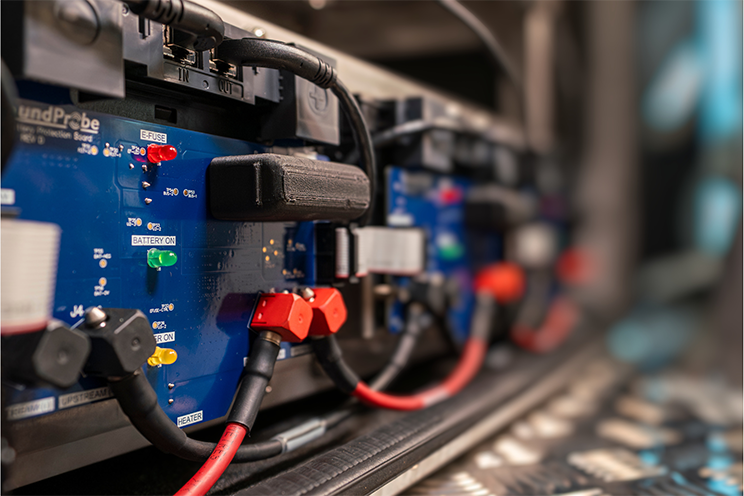
The team completely redesigned solutions for high power usage components, focussing particularly on power efficiency. Lead-acid batteries, a constant maintenance burden, were replaced with Supercapacitors and Lithium Titanate batteries, dramatically improving not just operating life, but also reliability in extreme temperatures. To achieve all these improvements, we went many levels deeper with our systems design and development, enabling completely optimised solutions, better diagnostics and supply chain control.
Perhaps the most important lesson was simple: the best system is the one that requires the least intervention.
The result is smarter, more energy-efficient technology that helps reduce operational costs without compromising monitoring performance.
Lower power consumption, reduced engine runtime, fewer maintenance-intensive components and improved battery technology all contribute to a platform built to help customers operate more efficiently over the long term.
Chapter 6: A philosophy of eliminating waste
Internally, The Next Generation Solution was guided by a single philosophy: eliminate anything that doesn’t add direct value.
The team applied Lean Six Sigma principles across the entire system. In the workshop, standardised fasteners and colour‑coded connectors reduced errors and saved time. In the field, maintenance cycles were minimised by removing failure‑prone components. In software, workflows were redesigned around real tasks rather than menu navigation.
The result is a system that respects both time and resources.
Every improvement served the same purpose: helping users boost productivity and save time. Whether in manufacturing, maintenance, or day-to-day operations, the team focused on removing friction and simplifying tasks so customers could spend less time managing systems and more time making informed geotechnical decisions.
Chapter 7: Hardware and software, designed as one
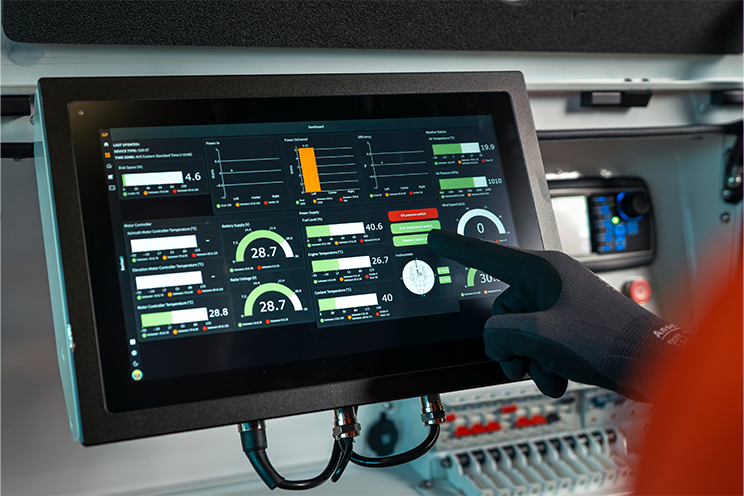
Developing the Next Generation Solution hardware alongside MonitorIQ® Next software fundamentally changed the outcome. Rather than adapting new software to legacy hardware, both teams worked toward a shared goal.
This enabled deeper system integration, with diagnostics and health monitoring built directly into the hardware. It also resulted in a more intuitive user experience, with hardware capabilities and software workflows fully aligned.
From the beginning, the goal was not simply to add more functionality, but to make powerful capabilities easier to access. The philosophy was clear: advanced doesn't have to mean complicated. By designing hardware and software together, the team created a platform that combines sophisticated functionality with intuitive workflows, demonstrating that advanced technology does not have to be difficult to use.
The Next Generation Solution is not two products: it is one integrated solution.
Chapter 8: Why Real Aperture Radar (RAR) matters
In complex mining environments, accuracy depends on physics. Real Aperture Radar (RAR) remains central to The Next Generation Solution – it is most resilient to atmospheric changes, and it minimises the effects of machines in radar monitoring area, as well as of other potential sources of radar measurement interference.
This means simply that RAR delivers more accurate measurements. The high signal-to-noise performance allows true wall movement to be precisely distinguished from background activity, while disturbances, such as passing trucks, do not compromise data integrity.
It is trusted technology, refined and strengthened rather than replaced.
Chapter 9: Less setup. More uptime
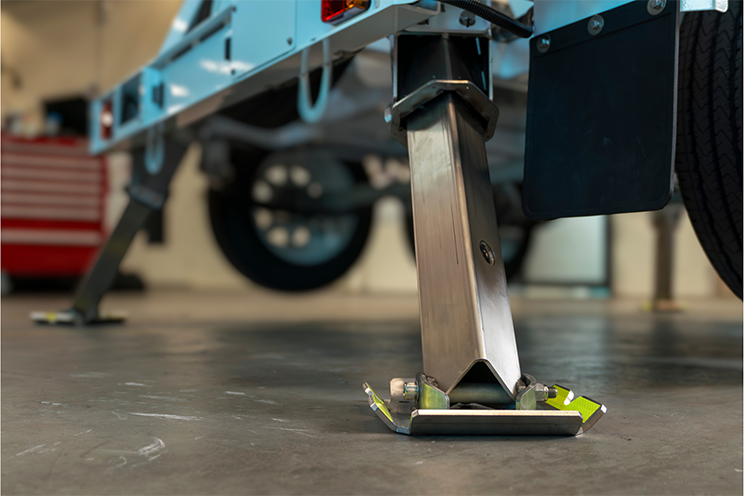
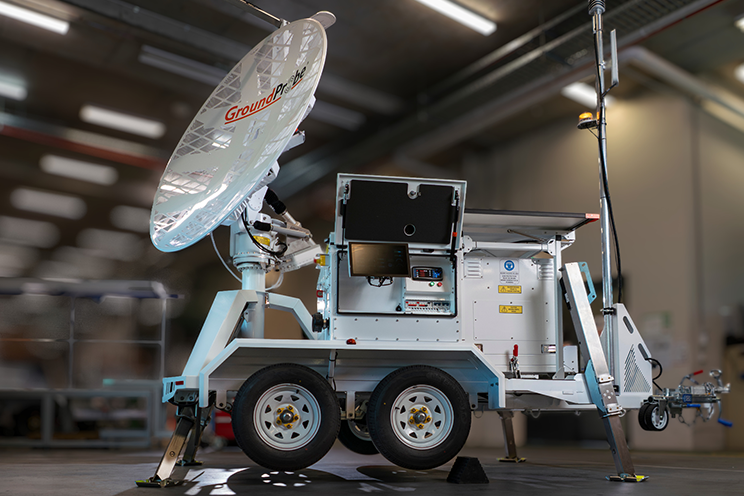
The Next Generation Solution was designed around a simple goal: less setup / more uptime. Automated electric outriggers eliminate manual levelling and reduce manual setup risks. The integrated trailer design removes alignment pins, turning hours of pickup into minutes.
MonitorIQ® Next supports users with task‑based workflows, reducing training effort while improving consistency. High‑resolution, low‑light cameras further strengthen operational awareness.
Together, these innovations enable faster deployment, streamlined operation and more time spent monitoring rather than configuring equipment.
Chapter 10: A platform built for what comes next
Developing the Next Generation Solution meant redesigning almost every component while continuing to support an active global fleet. Systems engineering discipline and perseverance enabled that transformation.
Today, the Next Generation Solution stands as GroundProbe’s safest, most reliable, and most capable platform. Its modular, upgradeable architecture ensures future innovation can be delivered on top of the platform as additional modules.
Looking back, the same themes appear throughout the development story: finding ways to help users save time, making powerful technology easier to use, reducing setup and maintenance requirements, improving energy efficiency and continually strengthening reliability. Taken together, those priorities shaped every major decision behind the Next Generation Solution.
It is not just a new radar; it is the foundation for the next decade of monitoring.
GroundProbe Next Generation
