
Blog
Tilt loggers vs prisms and robotic total stations: Which monitoring approach delivers greater visibility?
Infrastructure owners, consulting engineers and project teams face increasing pressure to protect assets within excavation and tunnelling Zone of Influence (ZOI) more effectively while reducing site visits, operational costs and safety risks.
For decades, optical prisms and robotic total stations (RTS) have been specified as the industry standard for measuring structural movement. While they provide point-in-time coordinate displacement data, relying on optical line-of-sight surveying and periodic measurements exposes projects to critical blind spots, especially during active construction phases.
However, as monitoring requirements become more demanding, many projects are discovering the limitations of relying solely on periodic measurements and optical line-of-sight availability.
The challenge with interval-based monitoring
Traditional prism and RTS monitoring captures movement at specific points in time.
While this approach can be effective, it depends on measurements being collected at the right moment.
If movement occurs between readings, critical changes may go undetected until the next survey cycle.
In addition to the limitations of interval-based data collection, traditional monitoring methods often face line-of-sight challenges, particularly in dense urban environments. Traffic, high-rise buildings, heavy machinery, scaffolding and other site activities can obstruct measurements, impacting data continuity and reliability.
Finding a suitable location for an RTS can also be difficult. Project teams may have limited access to stable monitoring positions, and in some cases require permission from adjacent property owners to install equipment. These logistical constraints can delay deployment, increase project complexity and limit monitoring coverage.
For infrastructure, rail and construction projects, reduced visibility and monitoring interruptions can affect decision-making, increase the likelihood that critical changes go undetected, and reduce confidence in the monitoring program.
As assets become more complex and stakeholder expectations continue to grow, project teams need access to continuous, reliable data that reflects what is happening in real time, not just when a survey can be completed or when site conditions allow a measurement to be taken.
Why angular distortion precedes detectable linear displacement
Before many structures show visible displacement, they often experience localised changes in inclination.
Structural damage is driven by angular distortion, differential settlement, and lateral soil movement along a 3D deformation field.
Monitoring tilt enables engineers to detect these subtle changes early, providing valuable insight into how an asset is responding to changing conditions.
Continuous tilt measurements can help identify developing trends before they become larger issues, supporting earlier intervention and more informed decision-making.
This is particularly valuable when monitoring:
- Retaining walls
- Temporary shoring walls
- Bridges
- Rail infrastructure
- Excavations
- Buildings and adjacent structures.
By understanding how assets are behaving over time, teams can move from reactive responses to proactive management.
Reduced manual effort through automation
One of the greatest benefits of tilt logger technology is the ability to automate data collection.
Rather than scheduling routine site visits to capture measurements, tilt loggers continuously gather and record data, reducing the reliance on manual monitoring activities.
To further support project reporting and stakeholder communication, GeoExplorer can automatically convert raw tilt measurements and user-defined structural lengths into linear displacement values in millimetres. This enables teams to quickly interpret movement data without the need for manual calculations.
The result is a more efficient monitoring program that can:
- Reduce field work and site access requirements
- Lower monitoring costs
- Improve data continuity
- Free up engineering resources to focus on analysis and decision-making
- Provide displacement data in a format that is readily understood by project stakeholders.
More frequent measurements also provide a more complete understanding of asset behaviour, helping teams identify trends that may otherwise be missed.
From sensor to insight
Effective monitoring relies on more than accurate measurements. Access to reliable, actionable data is equally important.
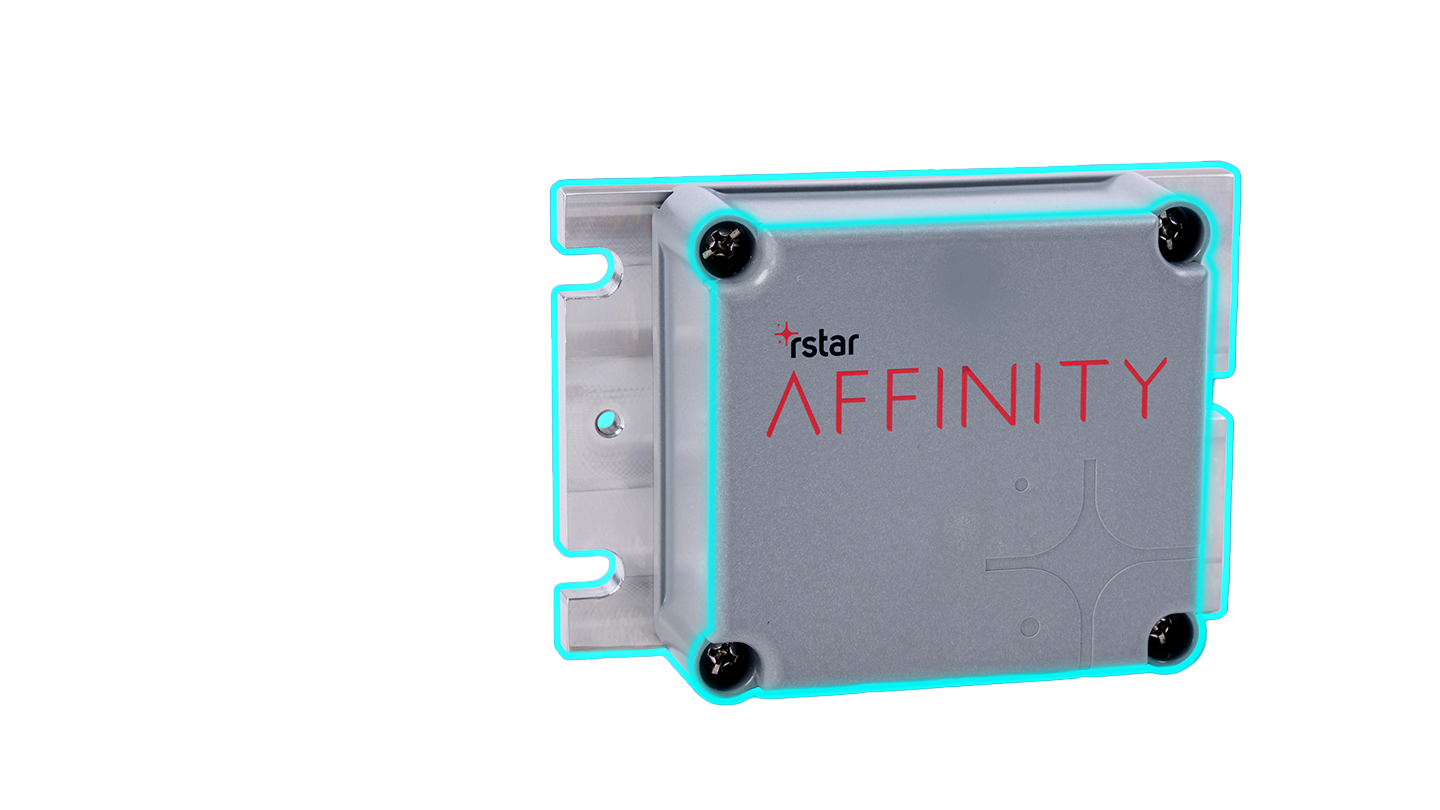
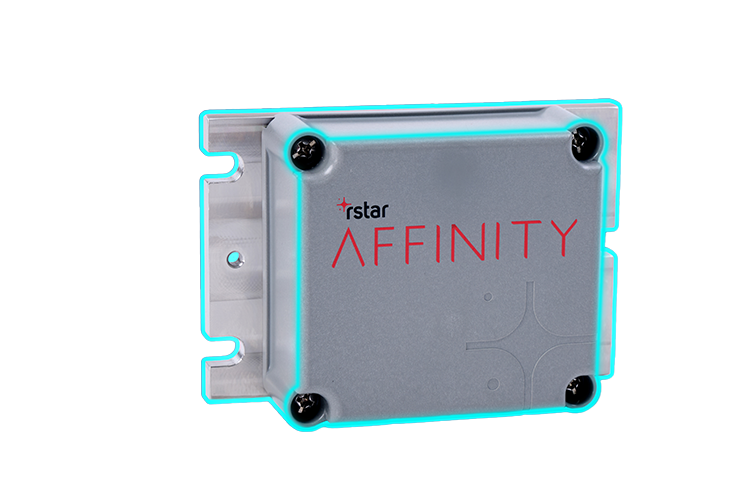
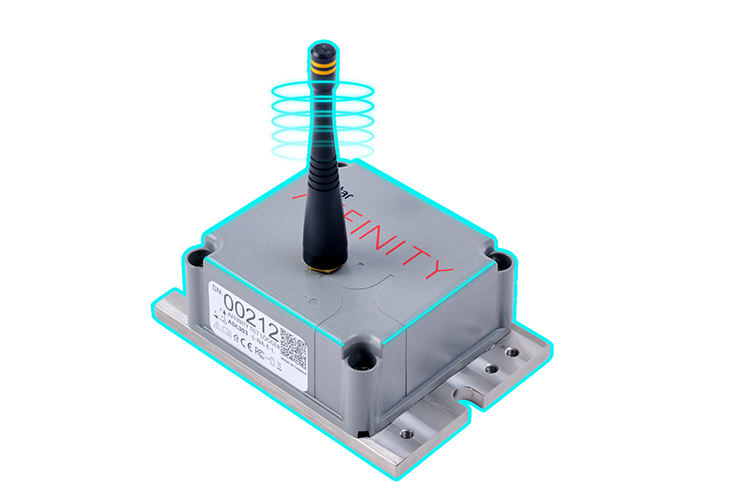
The RSTAR Affinity Tilt Logger combines precise triaxial tilt monitoring with seamless integration into the Affinity Digital Suite, providing a connected sensor-to-software workflow. Users can configure devices wirelessly, access data remotely and manage monitoring information through a centralised platform.
With low-power communications, long battery life and automated data collection, the system is designed to support long-term monitoring programs while minimising maintenance requirements.
Never miss the movement that matters
Prisms and robotic total stations remain valuable monitoring tools. But for projects seeking greater visibility, reduced manual intervention and earlier warning of changing conditions, tilt loggers offer a powerful complement or alternative.
By delivering continuous monitoring and timely insight, the RSTAR Affinity Tilt Logger helps project teams improve efficiency, strengthen risk management and make decisions with greater confidence.
LEARN MORE: RSTAR Affinity Tilt Logger