
Surface Coal
Nitrate risk reduction for surface coal mining
A collaborative approach to the safe management of nitrate on a surface coal mine site.
Nitrate risk reduction.
Nitrate risk reduction.
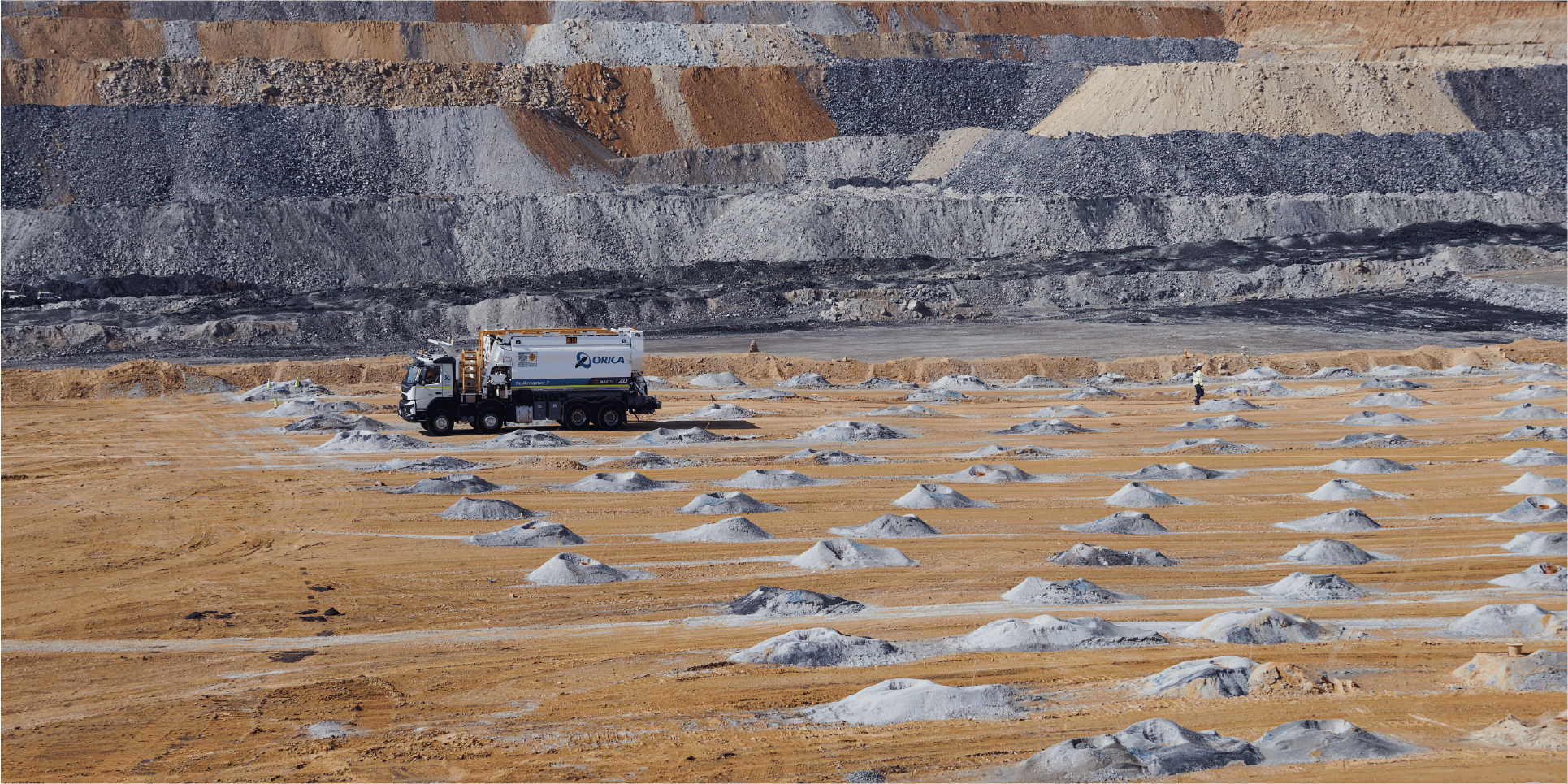
Nitrate leaching is a significant challenge in surface coal operations, where wet ground, high rainfall, and reactive conditions increase the risk of nitrate loss from blasting. Orica’s nitrate risk reduction solution combines a structured framework with specialised explosive products, like Fortis™ Protect, or the 4D™ Protect Bulk range and on-site expertise to reduce nitrate generation at source. By improving loading practices, selecting water-resistant formulations, and enhancing detonation reliability, we help minimise environmental impact while maintaining blast performance, supporting compliance, and reducing water management costs in challenging coal mining environments.
Benefits
Benefits
Driven by innovation and backed by our global research, development and technical networks, we deliver solutions that solve real operational challenges.

Improve safety

Operational efficiency and performance

Social license to operate

Sustainability and reduced footprint
Solution powered by

Blasting Solutions
Nitrate Risk Reduction Consulting Service

Blasting Solutions
Fortis™ Protect

Blasting Solutions
Bulkmaster™

Blasting Solutions
Consulting Services

Blasting Solutions
Total load service

Blasting Solutions
Technical Services
Delivering where it matters most.
Additional benefits
Delivering where it matters most.
Supporting nitrate mitigation in water-sensitive coal mining environments.
Compliance and environmental performance
Reduce nitrate discharge in environmentally sensitive areas and improve water quality outcomes.
Performance in wet conditions
Maintain blast reliability and effectiveness despite high moisture and groundwater interaction.
Practical on-bench application
Simple, scalable solutions tailored to large blast patterns and variable conditions.
Insights
Identify how water and geology contribute to nitrate risk and implement targeted improvements.
Reduced water treatment costs
Minimise downstream treatment requirements by reducing nitrate at source.
Frequently asked questions (FAQ)
What causes nitrate leaching in surface coal mining?
Nitrate leaching occurs when ammonium nitrate-based explosives come into contact with water in wet or reactive ground conditions, allowing nitrates to dissolve and enter water systems.
How do wet conditions increase nitrate risk?
Wet conditions allow explosives to degrade or dissolve before detonation, increasing the likelihood of nitrate loss and contamination.
How can coal operations reduce nitrate contamination?
Coal operations can reduce nitrate contamination by using water-resistant explosives, improving loading practices, and applying structured nitrate mitigation frameworks.
What products help reduce nitrate risk in coal mining?
Bulk emulsions such as Fortis™ Protect are designed to perform in wet conditions and minimise nitrate leaching.
Why is nitrate management critical in coal operations?
Surface coal mines often operate in water-sensitive environments, making nitrate control essential for regulatory compliance, environmental protection, and sustainable operations.
Want to know more about this solution?
Want to know more about this solution?
Contact an expert by completing the form.