
Case Study
Blasting vibration monitoring
01 Oct 2024
Division Ministro Hales Mine, Calama, Chile
Key Facts
Name: Division Ministro Hales (DMH)
Country: Chile
Location: 10 km north of Calama (Chile)
Operating company: CODELCO
Operative from: 2010
Type: Open-pit mine
Extraction: Copper
Yearly production: 181.704 ton3 of copper (2021)
Introduction
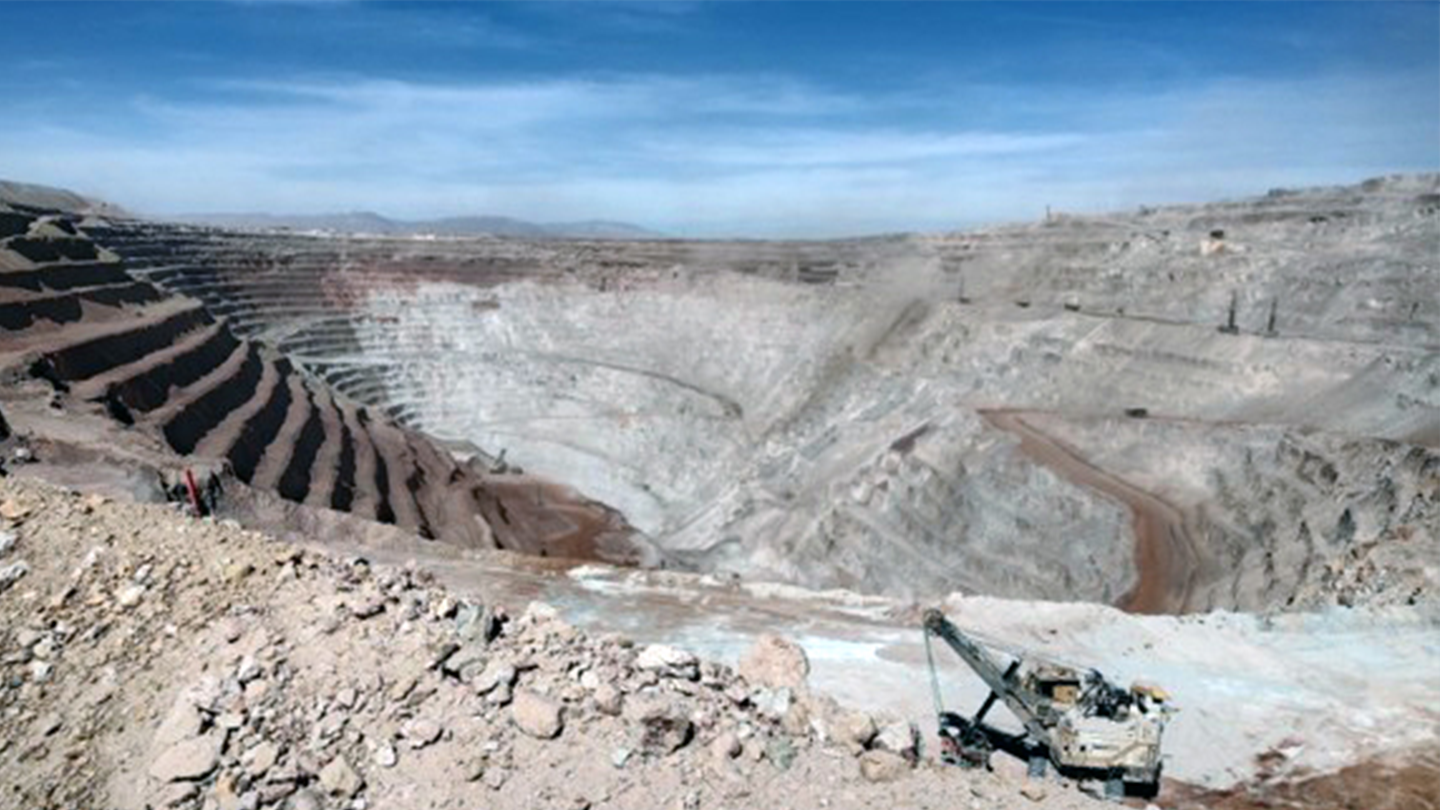
The División Ministro Hales (also called DHM) is a copper mine based in northern Chile, close to the city of Calama. It is managed by Codelco, and it has been active since 2010.
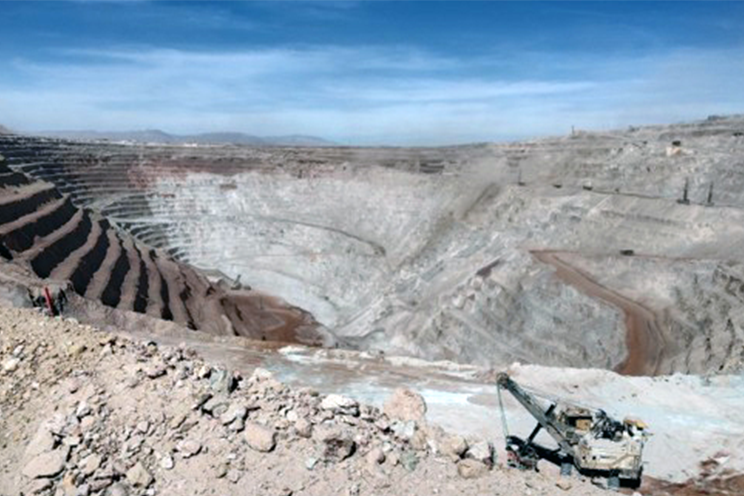
In November 2021, a substantial rockfall occurred, devastating a crucial section of the mine's constructed slopes, as visible in the right part of Figure 1. This event significantly disrupted site operations and caused considerable financial losses. Although on-site surveys effectively predicted the collapse and helped rescue personnel and equipment, mine management chose to strengthen monitoring. This proactive decision involved installing five fixed, permanent vibration monitoring stations in the mine's most critical areas to strengthen surveillance.
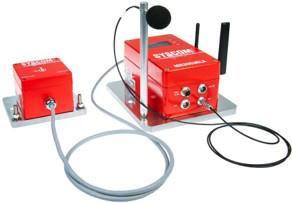
The chosen monitoring instruments are MR3003BLA devices manufactured by Syscom Instruments, which can measure velocity (in three directions) and air pressure.
 |
|  |
Monitoring configuration
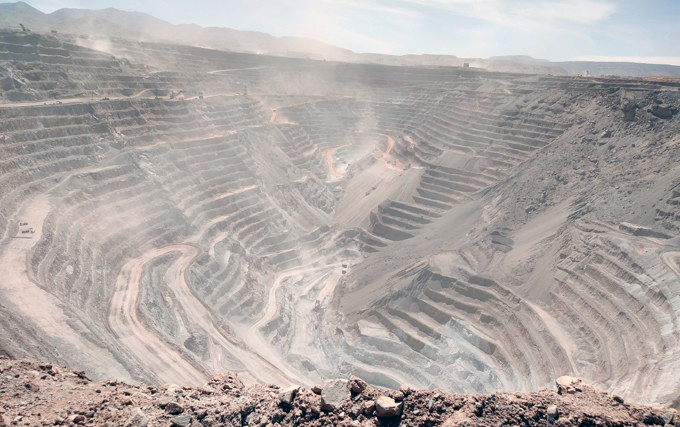
To maximize minable area and productivity, the mine strives to construct slopes as steep as possible. However, this approach increases the risk of collapses, necessitating the installation of various monitoring stations. Positioned strategically within the DMH mine’s critical zones, these vibration monitoring stations serve to detect any vibrations that may signal an imminent collapse. In Figure 2 a location very close to the vertical slopes is shown.
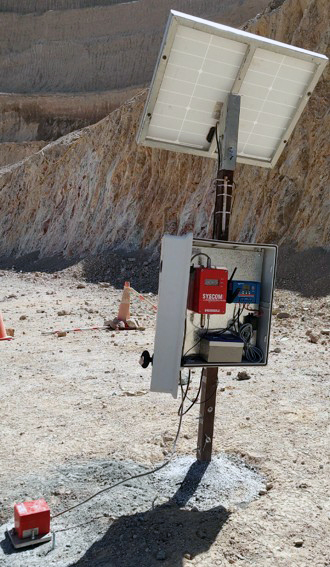
As can be seen in Figure 3, a monitoring station is composed by different elements:
- A solar panel 50 W
- A cabinet, including:
- the MR3003BLA recorder
- a battery 12 V, 12 Ah
- a voltage regulator for the solar panel
- The microphone, for air pressure monitoring
- The external triaxial geophone, for velocity monitoring.
While the microphone is installed directly on the rod, pointing towards the blasting zone, the vibration sensor is placed on the ground. To have a good coupling, the sensor is installed on a concrete pad that was previously injected in the ground.
All MR3003BLA have internet connection by means of the internal 4G modem and a SIM card with data subscription. As soon as data are recorded, they are immediately transferred to the dedicated FTP/SFTP server of Geoblast.
 |
Result
Data recorded by MR3003BLA devices are analyzed with a specific post-processing software.
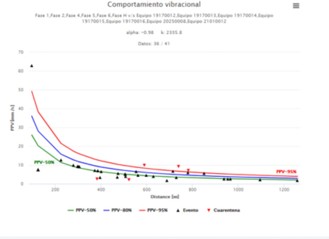
The main analyses done on the data acquired during the blasting activities are:
- Comparison to the American RI8507 norm, defining maximum vibration levels on site
- Evaluation of the PPV (Peak Particle Velocities) with respect to the distance from blasting and to the amount of explosive charge
- Evaluation of the evolution in time of velocity and air pressure values
In case of standard threshold exceedance or any abnormal data trends, the site managers are promptly notified. Subsequently, upon analyzing information obtained from various monitoring sources, they can make informed decisions regarding onsite operations and safety measures.
 |
Conclusion
The vibration monitoring inside the mines plays a crucial role in enhancing safety, optimizing equipment performance, and minimizing the environmental impact of mining operations, ultimately contributing to the sustainable and efficient management of mining resources.
MR3003BLA units continuously record vibration and air pressure data in the most critical zones of the DMH mine and automatically transfer it to specialised analysis software, which processes the data and evaluates the risk of potential collapses in different zones of the mine.
Special thanks to our Chilean partner Datageo for allowing us to do this case study.
- END -