Case Study
Increasing control of ore dilution to maximise material blending with OREPro™ 3D
31 Oct 2024
Site Profile
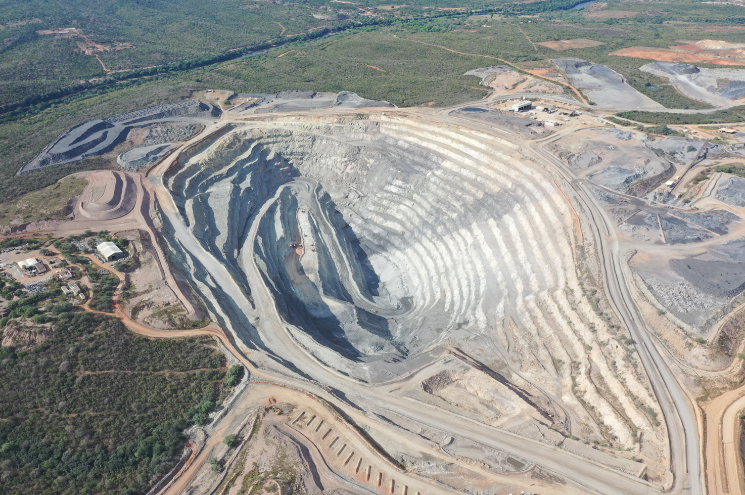
The Santa Luz mine (SLDM) is one of the largest gold mines in Brazil with an average of 2.2 million tonnes of high-grade ore extracted annually. Located 170km from Salvador, it is currently operated by Equinox Gold.
Mineralisation has strong structural control and the main ore lenses are hosted in carbonaceous volcanic and volcano-sedimentary rocks. The economically viable domains are characterized by the percentage of total organic carbon (TOC): dacite (TOC<0.5) and carbonaceous (TOC>0.5).
Gold recovery achieved through resin-in-leach (RIL) through a cyanidation process in SLDM, is then limited by the preg-robbing. Preg-robbing occurs when minerals retain gold due to carbonaceous matter and silicates, resulting in a reduced recovery in traditional cyanide leaching methods. Therefore, it was important for SLDM to find a solution to control ore dilution.
The situation
After each ore blast, mixing occurs between different lithological domains, resulting in high content and TOC percentage variability. A detailed classification of mineralized lithologies was created to address this issue, considering TOC content to facilitate tracking in mill blends.
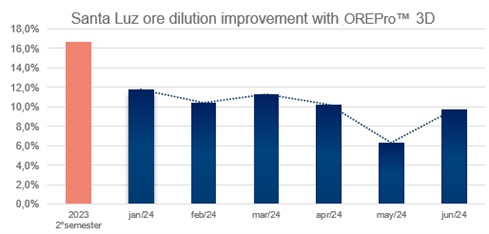
Despite the efforts of the SLDM team, the dilution value at the second half of 2023 was 16.7%, exceeding the target value of 15%.
Technical solutions
Once SLDM identified the impact of blasting on grade dilution was significant, the technical team actively pursued solutions available in the industry. Orica Digital Solutions presented OREPro™ 3D and performed demonstrations with data from different blasting operations to illustrate its applicability and the potential gains it could bring to the operations workflow.
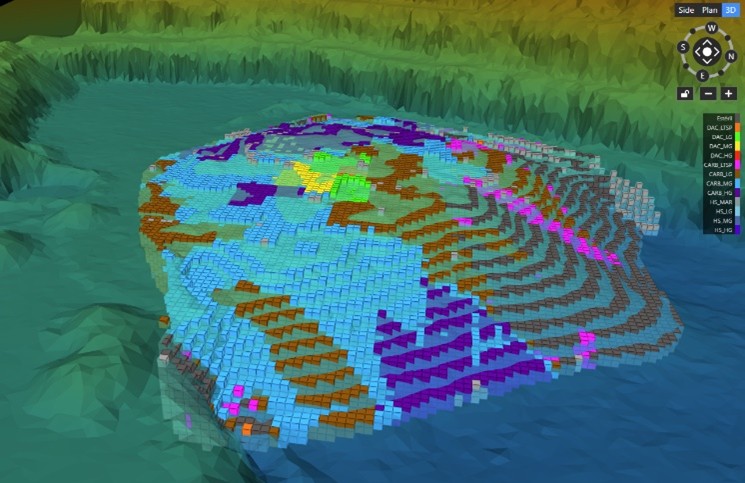
OREPro™ 3D allowed SLDM to accurately model blast movement. The resulting post blast model, as shown in Figure 2, gave the SLDM geologists confidence in the composition of their post blast polygons.
The result
To monitor the SLDM mineral reserves, the technical team conducts a detailed monthly evaluation of the excavated volume using topographic measurements. During this process, key parameters include the ratio between the mined waste tonnes and the mined ore tonnes, the average mining grade, and the dilution percentage.
After acquiring OREPro™ 3D, SLDM continued to conduct the same evaluations and in the first six months of using the solution, they achieved significant improvements. The new practice of blast modelling and mining on optimised post blast dig-layers allowed them to achieve an average dilution of 11% in the first half of 2024. In addition to achieving higher grade material, there is now better reliability of the grade in the blended material sent to the crusher.
SLDM found that reducing dilution to 11% equated to a saving of approximately USD$519,000 in the processing stage.
Orica Digital Solutions wishes to thank Equinox Gold for their collaboration, support and permission to publish this case study.
Author: Benedicte Kifumbi
"The Santa Luz mine presents a major challenge in controlling the variability of the material feed due to the carbonaceous characteristics of its orebody. Controlling grade and TOC requires constant work to reduce dilution and improve the classification of the material to be mined. OREPro 3D has been helping us significantly in controlling this variability, with agile and practical measures, becoming a key part of our routine."
— Jorge Luiz Campelo Correia, Mine Planning Technician
$519,000 USD saved
The new practice of blast modelling and mining on optimised post blast dig-layers allowed them to achieve an average dilution of 11% in the first half of 2024. SLDM found that reducing dilution to 11% equated to a saving of approximately USD$519,000 in the processing stage.
OREPro™
Learn more about how OREPro™ can support your operations.