
Case Study
Enhancing explosives performance and cost efficiency with 4D™
12 Nov 2025
Site profile
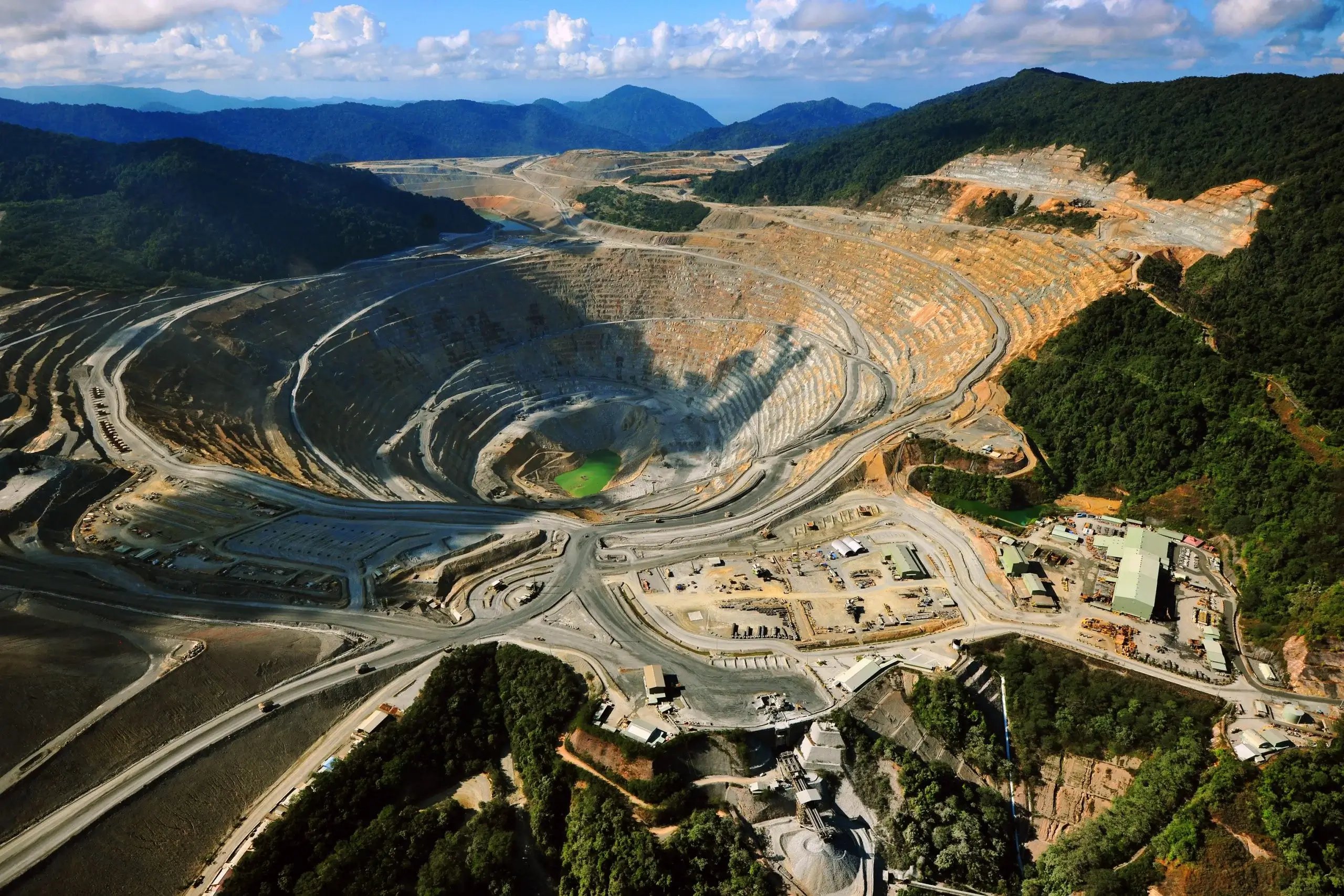
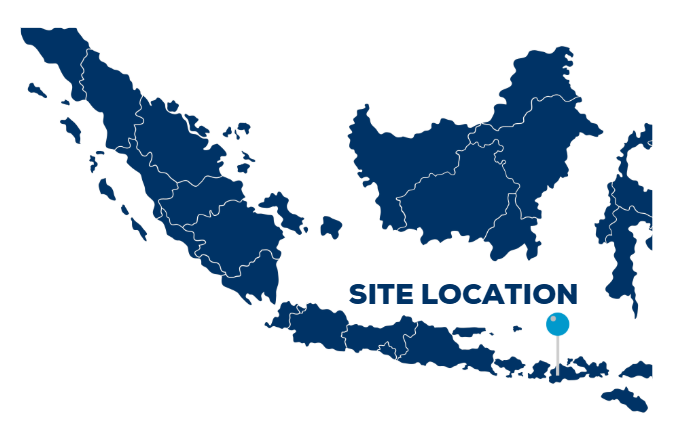
The Batu Hijau Mine is one of Indonesia’s largest open-pit porphyry copper-gold deposits, located on Sumbawa Island, approximately 1,500 kilometres east of Jakarta.
Operated by PT Amman Mineral Nusa Tenggara (AMMAN), the mine uses conventional open-pit truck and shovel methods to extract and process its valuable ore resources.
The Situation
AMMAN recognised that adopting advanced drilling and blasting technology was key to achieving the desired rock fragmentation.
By partnering with Orica, the company aimed to achieve better fragmentation, minimise cap rock, improve loading and hauling efficiency, and enhance safety while delivering stronger overall operational performance.
Technical solutions
Orica’s 4D™ bulk system expands the range of energy available from Orica’s trusted bulk emulsion blends for wet, dry and dewatered holes. 4D™ enables customers to precisely tailor explosive energy to match changing geology.
Delivered using Orica’s 4D™ enabled Mobile Manufacturing Units (MMU™), the system does not require bulking agents or high-energy additives.
The trial followed a phased approach to evaluate 4D™:
- Phase One – Product Verification: Verifying and validating the product across several Relative Bulk Strengths (RBS) using small-scale tests.
- Phase Two – Energy Matched and Higher Energy Trials: Testing designs with energy levels to match and exceed the standard design in three to four side-by-side blasts.
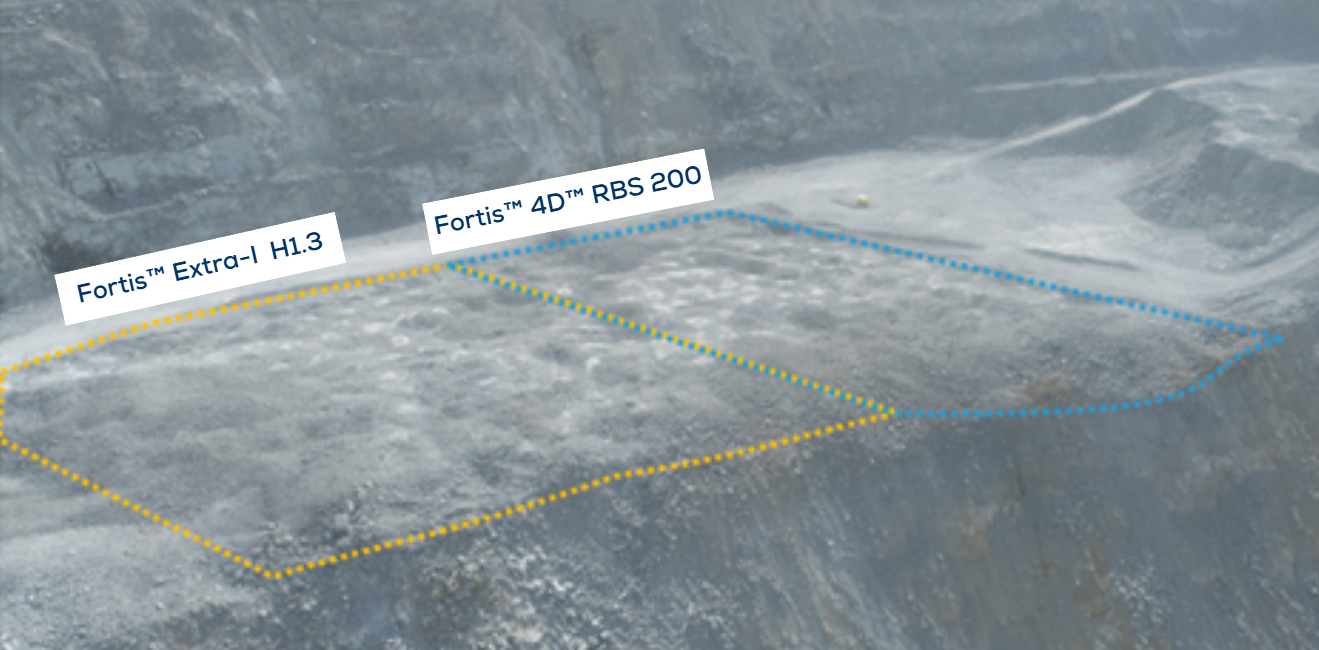
- Phase Three – Modified Design Trials: Expanding drill patterns using Fortis™ 4D™ Extra-i with higher energy. This phase included side-by-side and full blasts in ore and waste to assess 4D™ performance against the standard product and validate the value proposition for expanded patterns.
From phase one to phase three, the mine fired 564 tonnes of Fortis™ 4D™ Extra-i product.
The result
The collaboration between Orica and AMMAN successfully introduced Fortis™ 4D™, delivering several ongoing benefits over the three-month period.
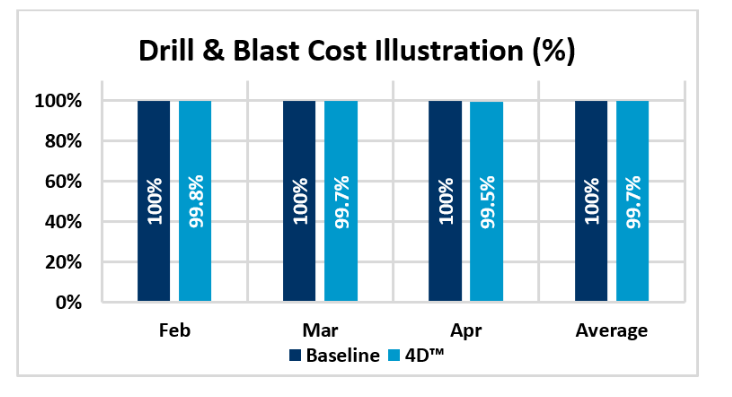
- The 4D™ blasts achieved better fragmentation and bucket fill time without increasing cost.
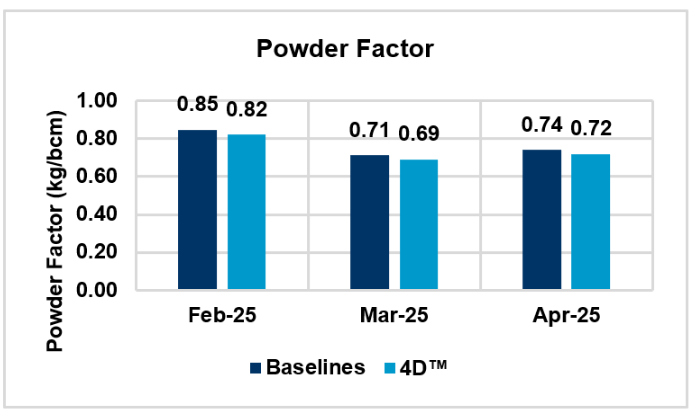
- The average powder factor of 4D™ blasts was 2.9% lower than the benchmark blasts.
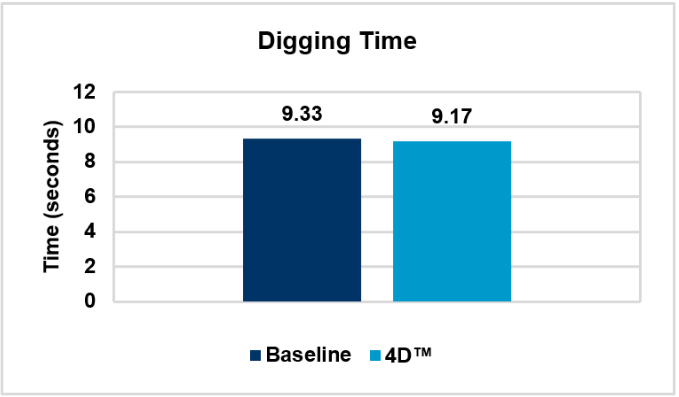
- Across 1,052 cycles, the 4D™ blasts recorded a 1.9% improvement in bucket fill time.
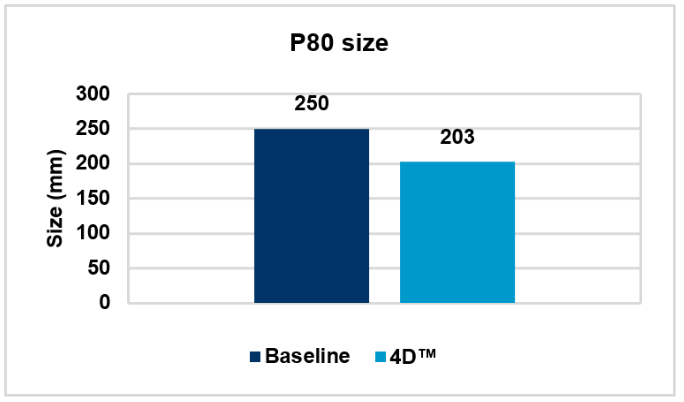
- 4D™ blasts delivered an 18.9% reduction in P80 size, decreasing from 250 mm to 203 mm, as measured using photogrammetric techniques.
The reduction in digging time shown in the trial results is indicative of improved fragmentation quality. This suggests that the 4D™ product delivered more favourable fragmentation outcomes than the baseline product, with the potential to improve overall excavation efficiency.
Key outcomes
- Better fragmentation and bucket fill time without increasing cost
- 2.9% lower average powder factor compared with benchmark blasts
- 1.9% improvement in bucket fill time across 1,052 cycles
- 18.9% reduction in P80 size, from 250 mm to 203 mm
“The integration of 4D technology into our drill and blast operations has resulted in cost optimization without compromising fragmentation quality. With embedded 4D technology, including 4D-enabled Mobile Manufacturing Units (MMU) with LOADPlus, BlastIQ, and SHOTPlus, we are now able to design and execute the blasts with better precision.
This includes refined burden and spacing configurations, optimised charge distributions and tailored explosives energy based on geological condition. These enhancements have not only reduced explosive and drilling costs but have also minimised overbreak and dilution, ensuring consistent fragmentation is suitable for downstream processing. Ultimately, this approach has led to increased productivity and enhanced overall mine-to-mill performance.”
— Mastoni Arman Damanik, Mine Technical Services Senior Manager, AMMAN
Acknowledgements
The authors express gratitude to the site Drill and Blast team for their support in preparing this case study. Special thanks to the Orica team for their assistance.
Authors: Ainun Hafidz, Budyanung Anindita, Rian Saerang, Sathio Zulkarnaen
Date: 22 April 2025
18.9% reduction in P80 fragmentation
up to 4.1% reduction
in the cost of drilling and blasting
per cubic meter
Related products and services
Quick summary
Summary | Fortis 4D™ extra-i enabled drill and blast optimisation at Batu Hijau: improving fragmentation, reducing powder factor and delivering faster bucket fill times and finer P80 for better downstream performance. |
| Customer Goals | Blast quality and performance, Data insights, Downstream processing efficiency, Ease of use, Field to cloud data workflows, Maximise resource recovery, Operational efficiency and performance, Total cost of ownership, Reduce drill and blast costs |
| Industry | Surface Metals |
| Products and Services | 4D Surface, Technical Services, Total Load Services, Bulkmaster Delivery System ,BlastIQ |