
Case Study
Reducing QA/QC cycle time with BlastIQ™ Underground
23 June 2026
MMG Rosebery Mine, Tasmania Australia
Site Profile
Rosebery Mine, wholly owned and operated by MMG Limited, is a long‑established underground polymetallic operation. Located in the township of Rosebery on Tasmania’s West Coast, approximately 300 km north‑west of Hobart and 125 km south of Burnie.
Mining is undertaken using mechanised underground methods, with ore processed through a conventional crush–grind–flotation circuit to produce zinc, lead and copper concentrates, along with gold doré and silver as by‑products. Operating for more than 90 years, Rosebery remains a key contributor to MMG’s Australian portfolio, underpinned by consistent production, modernised underground practices, and ongoing life‑extension initiatives focused on resource development and operational efficiency.
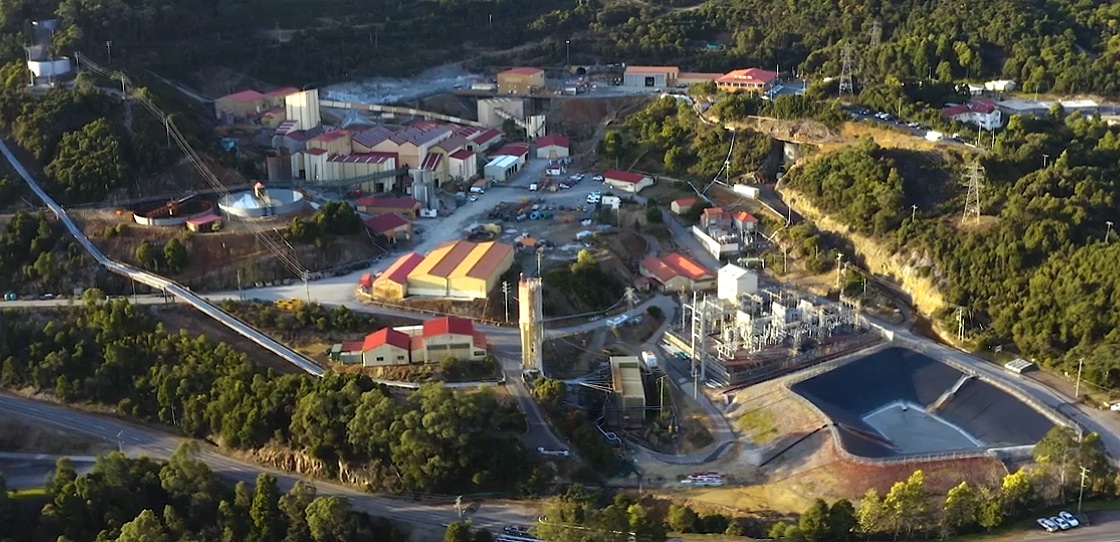
Figure 1: MMG Rosebery Mine, located on Tasmania's West Coast, Australia.
"Historically we've used a lot of paper-based plans for our drilling and charging activities. Prior to implementing BlastIQ, we were waiting over multiple shifts sometimes to get plans up from underground.
Technology and innovation is one thing that we're really focusing on the moment and making sure that we're an industry leader in technology growth. BlastIQ has been a key fundamental part of that progress for us."
Chris Knobben
Technical Services Manager
MMG Rosebery Mine
The Situation
Orica Digital Solutions and MMG Rosebery partnered to address persistent challenges with operational decision-making in challenging, underground production environments. Rosebery faced consistent challenges with tracking information centrally, managing timelines, allocating resources, and consolidating critical information across the mine proved an enduring challenge.
As the mine continues to operate at depth with increasingly detailed stope geometries and multiple mining fronts, MMG Rosebery has sought opportunities to modernise drill-and-blast workflows and enhance operational recording and visibility.
Efforts to maintain consistent performance while reconciling historical data for future optimisation were hindered by fragmented systems and manual processes.
MMG had previously attempted to enhance QA/QC workflows using excel-based methods and third-party tools. These proved to be ineffective, offering neither real-time visibility nor integrated functionality. Consequently, supervisors and technical teams required visibility into drilling, hole preparation, and loading compliance at different stages of the operational cycle, but insights were only available once information was manually retrieved or reported.
Ground crews relied on handwritten Progressive Logs of Drilling (PLODs), preparation plans, and charge instructions. This led to inconsistent data capture and delayed the transfer of critical information such as hole lengths, design details, and contextual commentary to the engineering teams. Site‐level workflows at Rosebery required mid‐shift drill unit change‐outs, Drilling parameters and drilling configuration differences limited design compatibility creating delays and friction during distribution and execution.
These operational challenges were amplified by communication gaps inherent to the underground environment. Traditional communication is often delayed or disjointed. Making communication among Engineering, Operations, and Technical Services difficult to confirm stope readiness, monitor job progress, and ensure accurate, on schedule delivery.
Technical Solutions
After identifying the operational challenges at Rosebery, MMG engaged with Orica Digital Solutions to explore the benefits of digitalising drill and blast processes. Orica Digital Solutions proposed the implementation of the BlastIQ™ Underground solution, delivering a connected, real-time workflow to replace manual systems and improve compliance, productivity, and data integrity.
The solution comprises three core components:
- BlastIQ™ Underground desktop application, enabling the ingestion, visualisation, review, and management of blast designs within the BlastIQ™ platform, and securely distributing design information to in‐field BlastIQ™ Mobile devices.
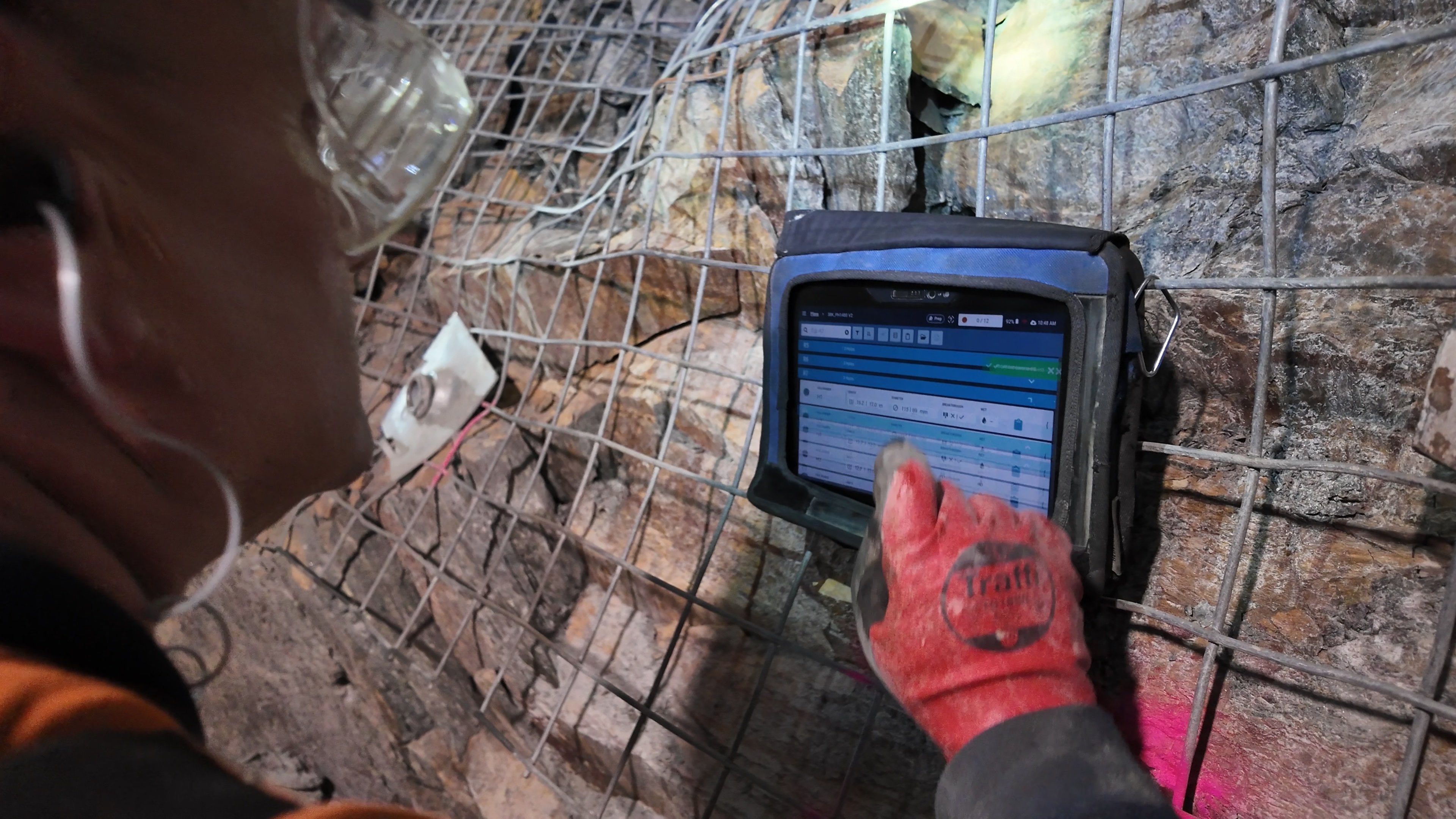
- BlastIQ™ Mobile, enabling underground crews to access digitised blast designs in the field (Figure 2) and accurately record blasthole status and loading data. In connected environments, blast pattern designs are automatically synchronised to the device, ensuring efficient, real‐time execution and auditable data captured.
- BlastIQ™ web portal, a browser‐based platform that enables the storage, aggregation, management, and sharing of blast‐related QA/QC data, providing dashboard‐driven visibility, KPI reporting, and structured blast insights for downstream analysis.
By centralising all critical information designs, drilling and loading records, initiation files, environmental data, and supporting media, the solution ensures visibility and control across the entire drill and blast cycle. Real-time connectivity, version control, and exception reporting reduce the risk of outdated or incomplete data influencing charging decisions, while simplifying audits and blast investigations.
This integrated approach empowers Rosebery to achieve higher compliance, improved execution efficiency, and a robust foundation for data-driven decision-making.
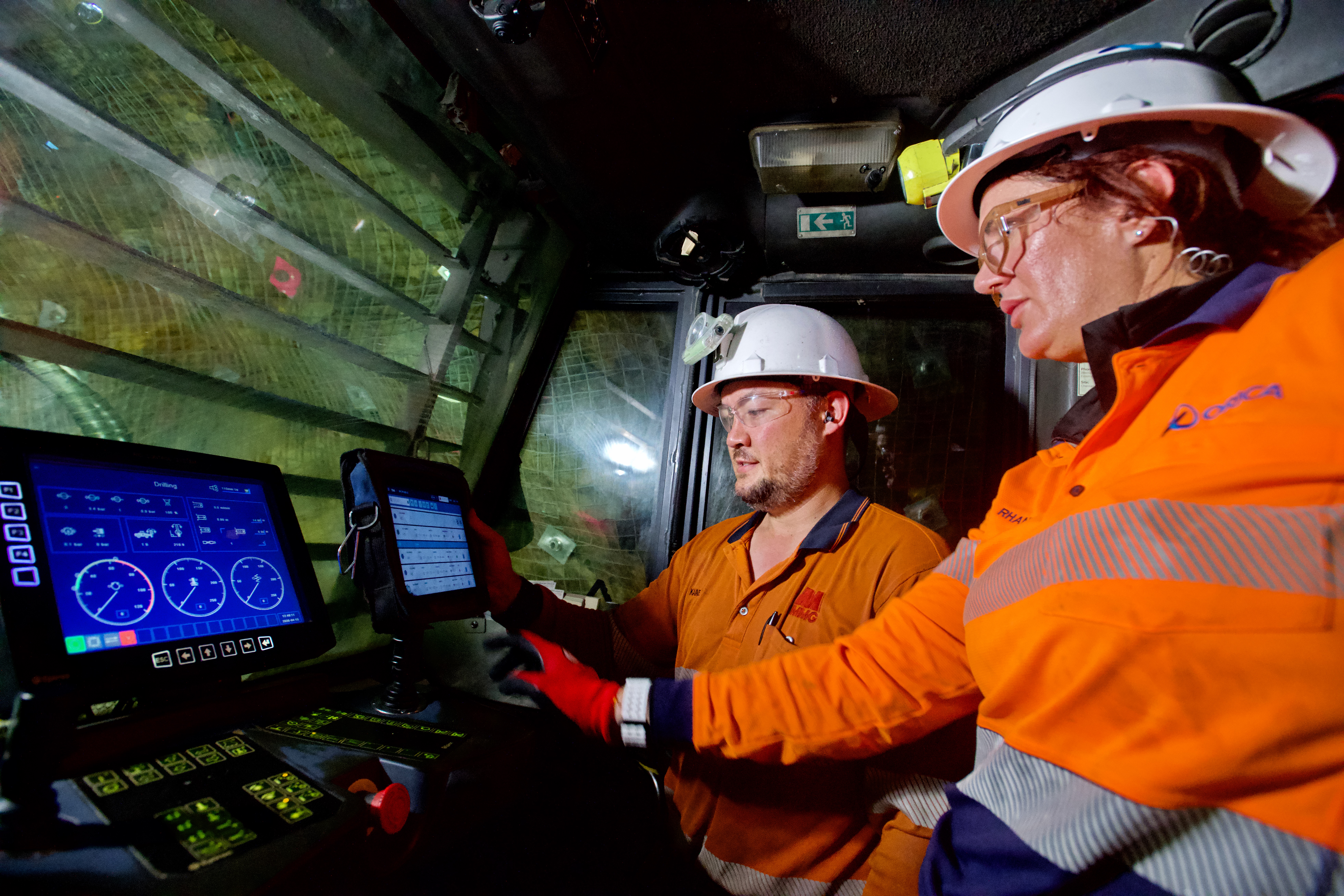
Figure 2: BlastIQ™ Mobile in the field.
The result
By digitalising the drill-and-blast process MMG Rosebery, has greatly reduced the overall QA/QC cycle time from drill preparation to charge. This was achieved by limiting the number of visits to the surface to communicate plans and changes, allowing engineers to review live data from the surface via BlastIQ™ Underground. While increasing the value of the information gathered, through operator buy in and clarity of information.
Through the implementation of the BlastIQ™ Underground suite of applications provided by Orica Digital Solutions, MMG Rosebery has digitised 165 blasts, capturing data for 9,908 holes and a total of 84,949 drilled metres.
As of April 2026, 11,277-hole actual inputs have been digitally recorded. Instances where holes were re-visited and prepared more than once were also collated electronically, highlighting and enabling detailed storyline analysis.
This digital record directly supports the accurate delivery, application and recording of 140,760kg of Subtek™ bulk explosives, all logged digitally at the job site. Together, these figures represent the complete, digitally captured drill, preparation, and charging process at MMG Rosebery.
Additionally, BlastIQ™ Underground enabled the drill‐specific adjustments to be made and communicated live between drillers and engineers, reducing downtime and improving operator productivity.
By seamlessly pushing and pulling updated designs through the cloud to mobile tablets, changes were implemented in near real-time at the job location. This reduced resource wastage, improved cross‐department efficiency, increased equipment utilisation and contributed to increased drilled metres per shift.
Acknowledgements
Orica are grateful for the collaboration with MMG Rosebery Mine, giving us the opportunity to jointly find improvements for their operation through our technologies, while complying with safety standards, maintaining positive interaction with communities and preserving the environment.
Author: Rhani Sim - Underground Specialist Digital Solutions
Jack Fowler - Blast Technician Orica
Date: 30 April 2026
Customer testimonial video
Customer testimonial video
Related items

Case Study
Driving underground production blasting quality with BlastIQ™ Underground
Case Study
Digitising underground drill and blast QA/QC with BlastIQ™ Underground
Case Study
Digitising drillhole-level execution and enabling near real-time operational control at Chelopech

Solution
Digital Blast Control & Optimisation

Business
Digital Solutions