
Case Study
Unlocking safer and more efficient shaft excavation
25 June 2026
How can you increase excavation productivity while maintaining strict vibration and safety constraints?
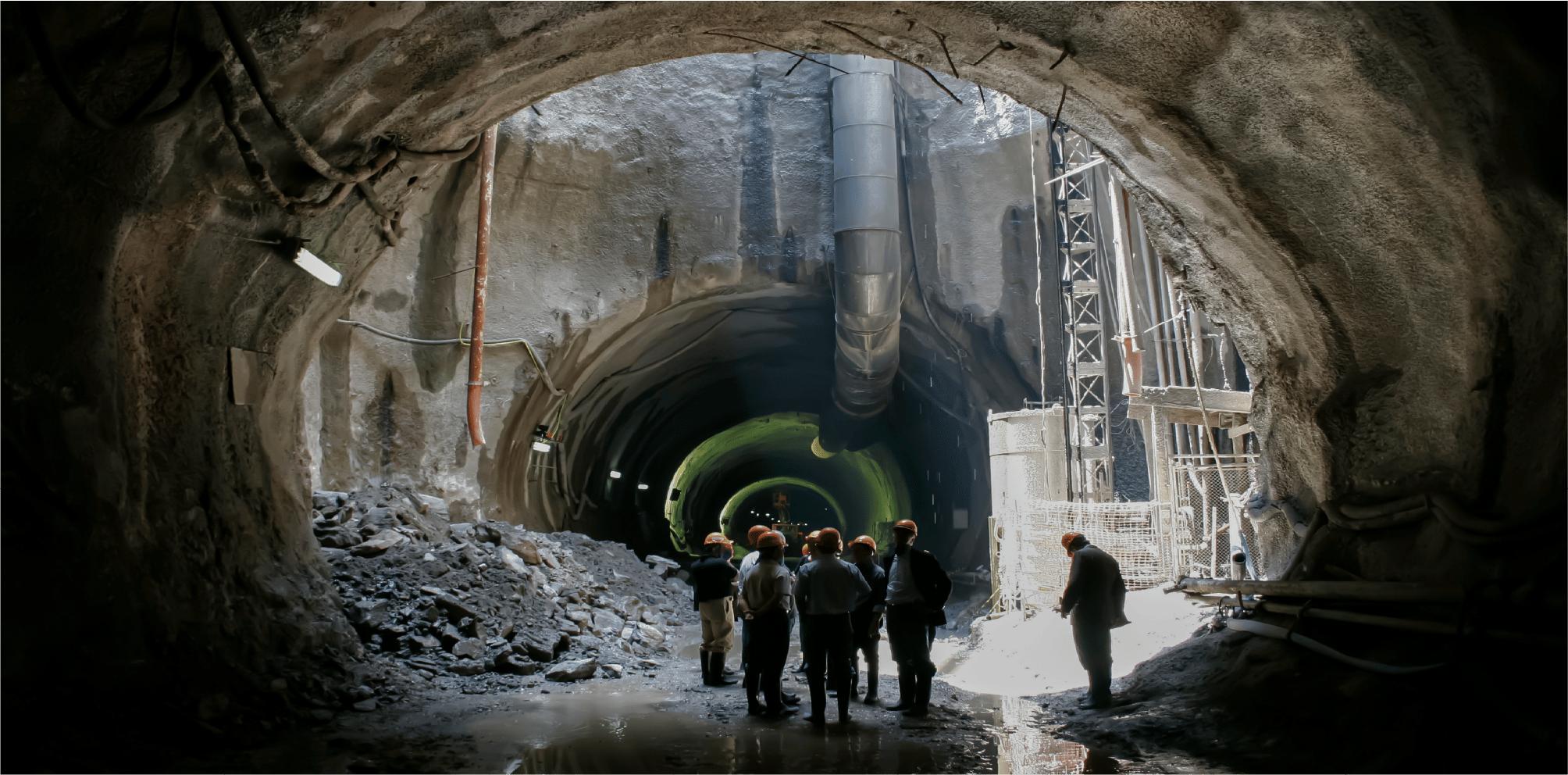
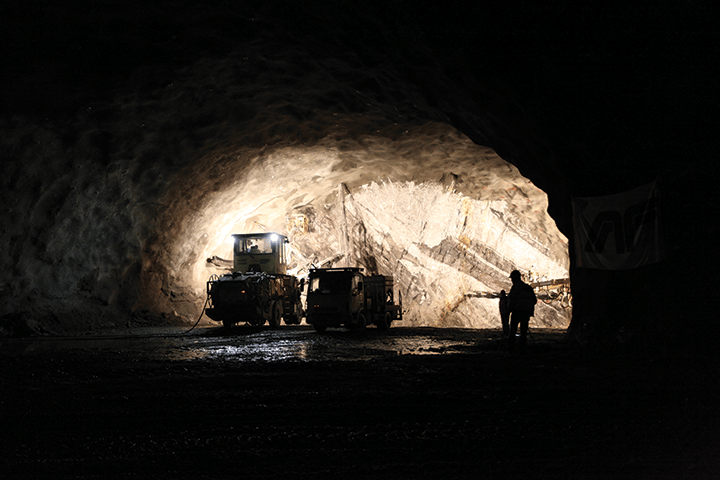
At Snowy 2.0, one of Australia’s largest energy infrastructure projects, excavation of the Marica upstream surge shaft presented a complex challenge. As drilling progressed into more competent rock, mechanical excavation methods slowed—requiring a transition to drill and blast to maintain project timelines.
However, strict vibration limits were in place to protect cement-grouted rock bolts and fibre-reinforced shotcrete supporting the shaft. Early blast designs required small charge weights and additional drilling, significantly reducing productivity and increasing cycle times.
The challenge
How could excavation rates be improved without compromising ground support integrity or exceeding vibration limits?
Key constraints included:
- A conservative vibration limit of 100 mm/s peak particle velocity (PPV)
- Sensitive temporary ground support systems
- Increasing rock competence with depth
- Inefficient early blast designs requiring additional drilling and loading
The solution
Orica partnered with Future Generation Joint Venture (FGJV) to implement a data-led, iterative approach—gradually optimising blasting performance while maintaining strict safety controls.
Establishing a safe baseline
Initial designs used small-diameter blasts and packaged explosives to demonstrate compliance with vibration limits. Once validated, blast depths were progressively increased.
Improving productivity with bulk emulsion
Transitioning from packaged explosives to bulk emulsion improved loading efficiency and fragmentation, significantly enhancing excavation productivity.
Increasing vibration limits safely
A third-party review assessed blasting data and confirmed that higher vibration levels would not compromise ground support. This enabled the vibration limit to increase from 100 mm/s to 250 mm/s, unlocking deeper, more efficient blast designs.
Optimising blast design
Larger blastholes and multi-bench designs reduced drilling effort and improved cycle efficiency. A 9-metre, three-bench blast design reduced hole count while increasing blasted volume.
The result
Through progressive optimisation, the project transitioned from cautious, shallow blasting to deeper, more productive excavation—while maintaining safety and control.
Key outcomes included:
- Increased vibration limits from 100 mm/s to 250 mm/s, supported by data and independent review
- Blast depths extended from 2 m to 9 m multi-bench designs
- ~25% reduction in hole count and ~18% increase in blasted volume
- Reduced frequency of high-risk activities and improved overall safety performance
The impact
By combining technical expertise with a structured, evidence-based approach, Orica helped unlock safer and more efficient shaft excavation—supporting the successful delivery of one of Australia’s most significant underground construction projects.
Acknowledgements
Orica is grateful for the collaboration withsnow 2.0, which has allowed us to jointly enhance your operations through our technologies. This partnership has enabled us to uphold safety standards, foster positive interactions with communities, and preserve the environment.
Related products and services

Industry
Underground construction and tunnelling

Solution
Vibration Control
.png%3Fh%3D960%26iar%3D0%26w%3D1920&w=3840&q=75)
Solution
Blast Design & Modelling

Solution
Environmental Monitoring

Blasting Solutions
Bulk Systems

Business
Blasting Solutions

Blasting Solutions
WebGen™
