
DIGITAL SOLUTIONS
Digital Inclinometer Spiral Sensor
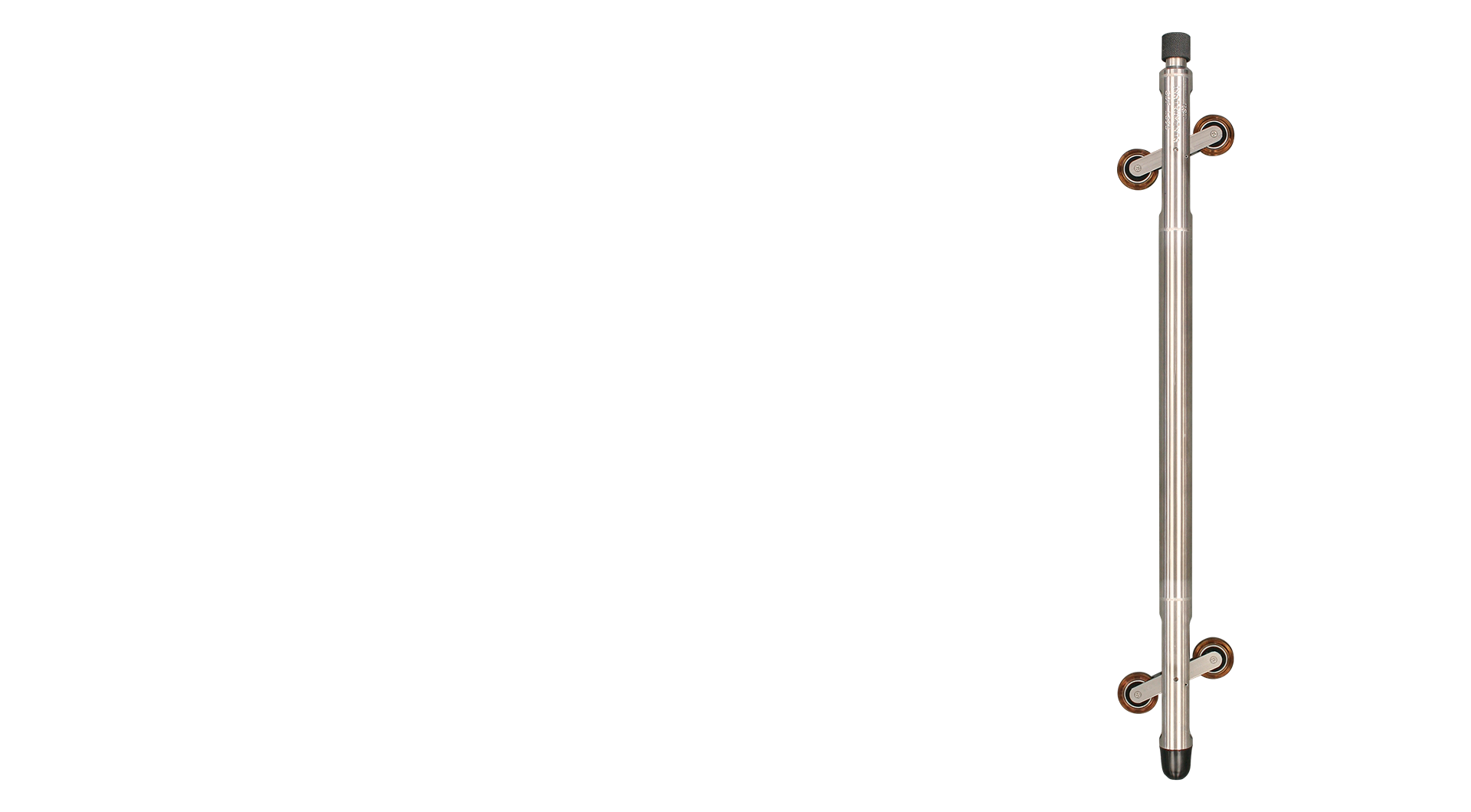
The RST Digital MEMS Inclinometer Spiral Sensor is used to determine down-hole helical deformation of installed inclinometer casing.
Overview

Overview
The RST Digital MEMS Inclinometer Spiral Sensor is used to determine down-hole twisting deformation that can happen during the installation of Inclinometer Casing. Installed casing spiral is a function of the manufacturing process, casing coupling, and installation technique.
Best casing installation practice requires that the casing be installed with the correct azimuth throughout the entire depth of the borehole, with no twist applied during the installation. An ideal installation RST inclinometer casing would typically maintain groove azimuth to within a few degrees over 30 metres. However, for very deep installations, or installations where twist due to installation problems is suspected, the Digital MEMS Inclinometer Spiral Sensor permits measurement of the installed groove azimuth down-hole and apply the necessary correction to data sets within the RST Inclinalysis™ Inclinometer Software.
Operation is similar to the RST Digital Inclinometer, using the same cable, reel, and hand-held readout. It is only necessary to read one data set; no 180 degree second reading set is required. Typically this measurement is only performed once in the life of the hole, as the casing is torsionally restrained by the backfill, typically grout.
The Digital Inclinometer Spiral Sensor is supplied in a robust carrying case. The RST Digital MEMS Inclinometer Spiral Sensor is used to determine down-hole helical deformation of installed inclinometer casing. Installed casing spiral is a function of the manufacturing process, casing coupling, and installation technique.
Best casing installation practice requires that the casing be installed with the correct azimuth from the start and throughout the installation, with no torque applied either intentionally or otherwise during the installation. Such carefully installed RST inclinometer casing would typically maintain groove azimuth to within a few degrees over 30 metres. However, for very deep installations, or installations where twist due to installation problems is suspected, the Digital MEMS Inclinometer Spiral Sensor permits measurement of the installed groove azimuth down-hole.
Operation is similar to the RST Digital Inclinometer, using the same cable, reel, and hand-held readout. It is only necessary to read one data set; no 180 degree second reading set is required. Typically this measurement is only performed once in the life of the hole, as the casing is torsionally restrained by the backfill, typically grout. RST Inclinalysis™ Inclinometer Software processes the resulting spiral data set.
The Digital Inclinometer Spiral Sensor is supplied in a robust carrying case.
Product features:
- "Hot swap" capability with RST's Digital Inclinometer System
- No additional software required
- Delivers reliable accuracy by eliminating errors caused by mechanical wear, friction, and magnetic interference
- Compact and lightweight design
Benefits
Benefits

Data insights

Ease of use

Improve safety
Features and benefits
Features and benefits
| Item | Specification |
|---|---|
| Material | Stainless Steel |
| Weight | 1 kg |
| Overall Length | 570 mm |
| Gauge Length | 400 mm |
| Accuracy | ±1° per 30 m typical |
| Resolution | 0.1° |
| Compatible Casing Sizes | 70 mm (2.75 in.) and 85 mm (3.34 in.) |
Resources
Resources
Related products

Digital Solutions
In Place Inclinometer System

Digital Solutions
Digital Vertical Inclinometer System

Digital Solutions
Digital Horizontal Inclinometer System

Digital Solutions
Metallic Time Domain Reflectometry (TDR)

Digital Solutions
Inclinometer Casing
Industries
Industries

Civil infrastructure

Construction

Energy
Surface coal

Surface metal

Underground mining
RST Instruments range

Digital Solutions
RSTAR Affinity

Digital Solutions
Data Loggers

Digital Solutions
Software

Digital Solutions
Piezometers

Digital Solutions
Inclinometers

Digital Solutions
Tiltmeters

Digital Solutions
Settlement Systems

Digital Solutions
Extensometers

Digital Solutions
Crack Meters

Digital Solutions
Strain Gauges and Strain Meters

Digital Solutions
Pressure Cells

Digital Solutions
Load Cells

Digital Solutions
Thermistors

Digital Solutions
Signal Cables

Digital Solutions
Readouts

Digital Solutions
Service and Partners
Explore more
We are a global leader in geotechnical, geospatial and structural monitoring. We deliver a complete portfolio, from sensors to services, for mining and civil infrastructure customers. Our expertise is grounded in Orica's innovation and technical excellence that span more than 150 years.






Contact an expert
Contact an expert