
Insight
When underground blasting becomes more complex, control matters more than ever
16 Sept 2026
Underground blasting is becoming harder to coordinate. ORBS™ helps teams regain control.
For many underground operations, legacy blasting systems have done the job for years. But as mines become larger, deeper and more complex, those same systems can start to add friction. Damaged firing lines, manual key movements, limited visibility, multiple firing sequences and extended blasting windows can make it harder to coordinate production and development blasting safely and efficiently.
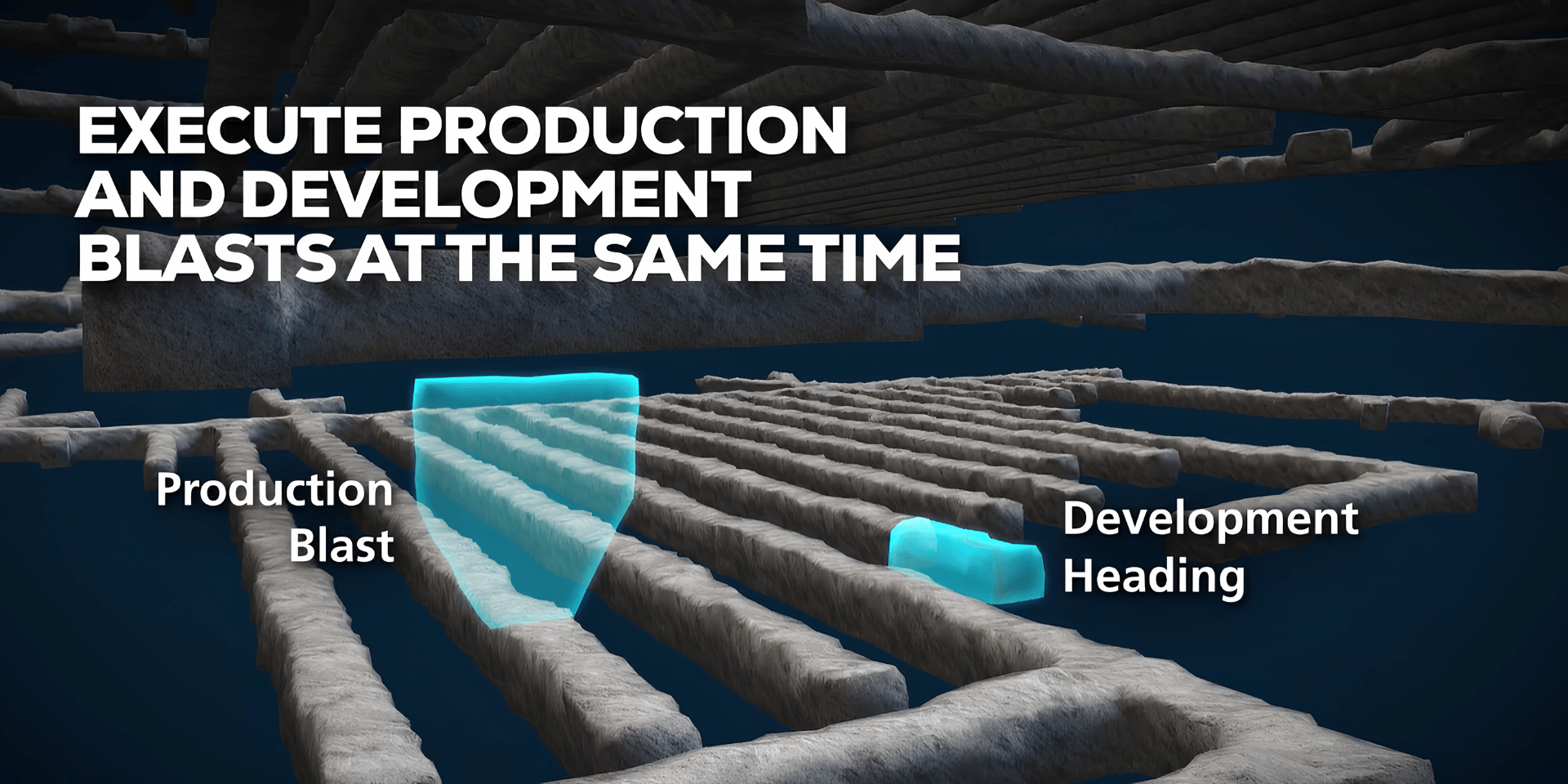
For sites ready to move beyond fragmented blast execution, a more streamlined approach can put control back in the hands of the operation and support stope optimisation. Blasts can be coordinated from a central point, with clearer visibility, reduced exposure and greater confidence across the blasting window.
ORBS™, the Omni Remote Blasting System, helps make that shift possible. By centralising blast initiation through a single remote location. Using a browser-based interface and existing mine communications infrastructure, ORBS™ gives underground teams a practical way to simplify blasting, reduce reliance on legacy firing lines and regain greater control as operational complexity grows.
The value of ORBS™ is best understood through the experiences of different underground mines using it to solve different operational challenges. Across Bulyanhulu in Tanzania, Kristineberg in Sweden, and Fimiston in Western Australia, a common theme emerges: underground teams need safer, simpler and more controlled ways to manage blasting as their operations become more complex.
The old way of working: Reliable in the past, harder to sustain at scale
- At Barrick’s Bulyanhulu gold mine in Tanzania, underground blasting had historically relied on hard-wired firing cables for production and development blasts. This created several challenges, including delays from damaged firing lines, limited flexibility when blasting multiple stopes, leakage constraints when firing large blasts with long downlines, and the need for shotfirers to be underground during blasting.
- At Boliden’s Kristineberg underground mine in Sweden, the site previously relied on non-Orica electric starter detonators to initiate non-electric production and development blasts. This depended on outdated permanent firing lines installed from the surface, down the shaft and throughout the mine. Maintaining that legacy system became increasingly difficult, prompting the mine to look for a safer and more efficient way to fire multiple production and development blasts from a central control location.
- At Fimiston Underground, part of Northern Star’s Kalgoorlie Operations, the challenge was different again. The mine was rapidly expanding into a complex, multi-mine underground operation across United Consols, Union Jack, Golden Pike Stockworks and Croesus. Each area had independent services and ventilation systems, increasing the complexity of drill-and-blast planning, communication and execution.
In each case, the challenge extended beyond blast initiation itself. The operational effort required to plan, coordinate and execute blasting was becoming increasingly difficult to manage.
In these complex cases, this is where ORBS™ is able to give sites a practical solution to improve control, reduce exposure and coordinate complex production and development blasting, showing real outcomes.
A safer way to initiate blasts from a point of control
One of the clearest customer benefits of ORBS™ is the ability to move blast initiation away from active underground areas and into a designated, remote firing location.
At Bulyanhulu, all production and development blasts are now initiated from a designated blasting room in a surface office, helping reduce personnel exposure to blast-related risks such as rockfall and fumes.
For Bulyanhulu, this shift was significant because the previous hard-wired firing cable system required shotfirers to be underground when blasting. By introducing ORBS™, the site gained a remote, centralised way to safely control initiation of multiple development headings and production blasts through a browser interface.
Elias Kivuyo, Senior Drill and Blast Engineer at Barrick Bulyanhulu, described ORBS™ as a "game-changer" because firing all blasts from a single point reduced personnel exposure while improving safety and operational efficiency.
At Fimiston Underground, centralised initiation helped reduce personnel exposure while supporting blasting across multiple mining areas. During commissioning, 14 live firings were completed, including 10 development blasts and four production blasts, all initiated remotely from the surface without reported issues.
The result is a safer blasting process with fewer manual steps and a clearer point of control.
ORBS™ helps teams move from a more exposed, manual and fragmented blasting process to one that feels more controlled, visible and accountable. It gives blast teams a safer point of control, while helping operations maintain the firing reliability required to keep production moving.
Reducing delays and making the blasting window easier to manage
Blast delays do not just affect the blasting team. They can affect re-entry, shift handover, production time and the confidence teams have in the execution window. At Bulyanhulu, ORBS™ reduced the average blasting delay time by approximately 30 to 45 minutes per shift, translating into a total annual saving of 36.5 shifts.
The system also simplified when blasting multiple stopes in a blasting window by presenting all blasts to be fired in a user-friendly interface. This helped improve efficiency in blasting operations and re-entry procedures.
For growing underground operations, this matters because blasting delays can feel like lost control. ORBS™ helps return control to the operation by simplifying setup, reducing manual steps, and helping teams execute the blasting window with greater consistency.
Coordinating production and development blasting across comlpex underground networks
As underground mines grow, blasting coordination becomes more difficult. Fimiston Underground is a strong example of this. The site expanded into a complex multi-mine underground operation across several geographically separate mining areas, each with independent services and ventilation systems. This increased the complexity of drill-and-blast planning, communication and execution.
Fimiston needed to coordinate production and development blasting across multiple separate mining areas from a single remote blasting location. The objective was to establish a system that could deliver consistent blast outcomes while maintaining strong safety and operational control across multiple mining areas.
ORBS™ supported that requirement by enabling secure, wide-area blast initiation from a single remote location using the site’s closed underground LAN infrastructure. It helped Northern Star synchronise blasting activities across United Consols, Union Jack, Golden Pike Stockworks and Croesus while reducing personnel exposure in active underground areas.
.jpg)
Miguel Bachiller, Mining Manager - Underground at Northern Star Resources, KCGM, said implementing ORBS™ for underground production blasts was a significant step forward, with noticeable improvements in operational efficiency and blast consistency. He also noted that centralising the system streamlined end-of-shift firing processes by helping ensure the underground was clear of personnel before initiation.
For growing underground operations, ORBS™ provides a practical way to manage blasting activities across multiple mining areas from a single location.
Replacing legacy infrastructure with a more practical path to modern blasting
For many underground mines, modernising blasting does not mean replacing everything at once. ORBS™ is designed to fit into existing underground blasting environments and can work with compatible electronic blasting systems while also supporting non-electric blasts using an electronic starter detonator. This enables customers to reap the benefits of ORBS™ while implementing a slower conversion model.
At Kristineberg, ORBS™ enabled the mine to move away from outdated permanent firing lines and non-Orica electric starter detonators. By fully implementing i-kon™ III and ORBS™, the site eliminated electric starter detonators and switched to a safer alternative that is immune to stray voltages and currents typically present in underground mines.
The Kristineberg team also reported reduced manual maintenance, improved network efficiency and enhanced safety through secure, traceable user access. Anders Gavelin, Production Manager at Boliden Kristineberg, noted that the new setup reduced the need for manual maintenance in the mining areas because the site no longer needed to install or extend sliding cables in production areas.
ORBS™ provided Kristineberg with a practical pathway away from ageing firing infrastructure while improving safety and reducing maintenance requirements.
Improving visbility, traceability and confidence in blast execution
ORBS™ also helps strengthen reporting and traceability. At Fimiston, the system provided centralised access, controlled user permissions and automated blast reporting, improving traceability and oversight across development and production blasting activities.
At Bulyanhulu, blast data is collected and stored in a cloud-based, searchable SQL database, enabling faster customised reporting and review. Troubleshooting also became easier, as each level could be addressed independently with its own Blaster 3000.
At Kristineberg, ORBS™ is connected to an isolated network and operators use personal login credentials. The case study states this enhances security through traceability, individual access control and clear accountability.
Together, these capabilities help sites improve reporting, traceability and visibility across blasting activities.
Get more on ORBS™

Case Study
ORBS™ Implementation at Barrick Bulyanhulu: Improving Safety and Blasting Efficiency in Underground Mining

Insight
Connected underground mining solutions for greater control.

Case Study
ORBS™ enables centralised underground blasting at Fimiston

Solution
Stope Optimisation

Case Study
Implementing ORBS™ Centralised Blasting System in an underground mine.

Solution
Sub Level Open Stope

Blasting Solutions
ORBS™

Industry
Underground mining







The latest EBS Stories
Case Study
Implementing ORBS™ Centralised Blasting System in an underground mine.

News
Inside EBS: Dirk Hummel on the Origins of i-kon™

Case Study
Reducing operational downtime while enhancing quarry blast safety with uni tronic™ 600 remote firing system.

News
Celebrating 25 years of EBS

News
Demystifying Electronic Blasting System (EBS) Dynamic Pressure Resistance Claims.

News
Orica and Oyu Tolgoi partnership drives mining innovation and efficiency in Mongolia
News
Orica at EFEE 2025

News
Transforming mining with WebGen™: the wireless blasting revolution
